Showing posts with label Cheval Blanc. Show all posts

Wednesday, 25 July 2012

Tesco to start selling Lafite


In an ambitious move into fine wine, supermarket giant Tesco is to start selling Château Lafite and other classed growth Bordeaux as part of a new fine wine offer both in store and online. As reported on db.com, beginning with the much-lauded 2009 vintage, other wines to go on sale at a select few branches of Tesco will be first growth Château Mouton-Rothschild, flying fifth Pontet-Canet, St-Emilion’s Cheval Blanc and Cos d’Estournel in St-Estèphe.

“The wine was shipped sometime ago, we’re just trying to decide what to call the offer at the moment, as it won’t be an en primeur offering,” Tesco’s director for beers, wines and spirits Dan Jago told db, insisting he has “good quantities” of all of the wines, and that the duty paid prices will be “very competitive.” “We made the move as some of our customers were asking for certain fine wines we didn’t stock,” he said.

The wines will be available by the bottle and mixed case at the end of the summer in 25-30 of Tesco’s most upmarket stores around the UK. “I want to offer them as single bottles as we want to deter investors. We want the wine to be bought by the people who are going to pop the cork,” Jago added. Every little helps…  

Monday, 6 February 2012

LVMH profit boosted by wine and spirits

The world's largest luxury goods group, LVMH, reported a 1% rise in 2011 net profit this week, as the company continues to show strong growth in its wine and spirits division, despite economic uncertainty in Europe. As reported on the drinks business, the group’s net profit topped €3 billion as sales jumped 16% last year, driven mainly by spending in Asia. "I'm going to be a bit repetitive because 2011 was an excellent year like 2010, and like I hope 2012 will be," said chief executive Bernard Arnault.

"After an exceptional 2011, LVMH is well-equipped to continue its growth momentum across all divisions in 2012. Its strategy will remain focused on developing brands through strong innovation, quality and expansion in high potential markets," he added. The French group’s portfolio includes Champagne brands Dom Pérignon, Krug, Veuve Clicquot and Moët & Chandon, Château d’Yquem in Sauternes, and Château Cheval Blanc in St Emilion. It also owns Glenmorangie and Ardbeg whiskies, and Belvedere vodka.

LVMH's robust performance sets high expectations for the luxury goods industry. "It's somewhat of a paradox to say that 2011 was a year of global prosperity, but we are lucky to export most of our products," Arnault said. The company’s latest figures show that the European debt crisis hasn't triggered a slowdown in the US. In the fourth quarter, sales in Europe rose 3%, but the strongest growth came from the US and Asia, excluding Japan.

Arnault doesn't see an end to LVMH's good fortune. "Barring a major accident and despite the difficulties in Europe, the world economy is growing and the world wants more and more of our products," he said. The company’s fashion division, which includes brands such as Louis Vuitton, Bulgari and Dior, also showed strong growth.

Wednesday, 23 November 2011

Cheval des Andes at Villa d'Este

Wine and the City tastes two Argentinian gems: Terrazas de los Andes Afincado Single Vineyard Malbec 2007 and Cheval des Andes 2007 with estate manager Hervé Bernie-Scott at Villa d'Este on Lake Como during the World Wine Symposium 2011.

Monday, 14 November 2011

James Martin

Wine and the City talks to celebrity chef James Martin at the London School of Hospitality and Tourism about food and beer matching, working at Château Cheval Blanc as a teenager, his passion for Gaja and Montrachet, and why molecular gastronomy does his head in.

Thursday, 17 February 2011

New in town: Chabrot Bistrot dAmis/QV Bar


With the new year comes new openings – not that London ever needs an excuse to roll a new restaurant/bar/club out. The pace of change in the capital's culinary scene at the moment is exhilarating. So many bars, so little time... I did manage to find the time recently to visit two newbies: Chabrot Bistrot d'Amis and the QV Bar at Quo Vadis in Soho. The former is the brainchild of Yann Chevris, former general manager of L'Atelier de Joel Robuchon.

Chevris has teamed up with Michelin-starred chef Thierry Laborde, formerly of L’Oranger, Le Gavroche and Le Louis XV with Alain Ducasse, and sommelier Philippe Messy – the youngest ever sommelier at a three Michelin-starred restaurant when he worked with Marco Pierre White at the Hyde Park Hotel.

Messy co-founded Sarment – a private sommelier service offered to seventy-five members globally each year, with Gearoid Devany in 2009. The company takes sommeliers from the world’s top restaurants and makes them available to their members. Each member has a dedicated personal sommelier to advice them on all aspects of wine buying, tasting, storage and investment. The joys of owning a platinum Amex...

Back to Chabrot: the 65-cover restaurant is named after a Dordogne ritual popularised during the food shortages of the second world war whereby red wine was poured into a soup bowl after the meal to ensure you got all the nutrients from the soup. The walls are lined with mawkish monochrome scenes of rural France and peasants breaking bread. It has a cosy feel, as if you've been before. And you probably have – Chabrot bares a striking resemblance to an upmarket Café Rouge, from the red walls to the wooden chairs – it's all reassuringly familiar.

The Southern French menu features bone marrow, duck liver pâté with Comté cheese popovers, homemade pasta with Périgord truffles, roasted foie gras with raisins, and Laborde’s signature dish: chicken stuffed with foie gras. On the launch night platters of warm, crunchy calamari kept the crowd pleased, along with charcuterie and cornichons, and mini macaroons. Befitting of a bistro, the wine list is predominantly French, starting at £19.50 a bottle, and includes top names such as Taittinger, Domaine Dujac and Château Montrose. Topping the list is Château Cheval Blanc 1998, at an eye-watering £900 a bottle.

Another new kid on the block is the QV Bar at popular Soho haunt Quo Vadis. Owners Sam and Eddie Hart decided the 'dead space' in the restaurant would be better suited as a bar, so converted the restaurant's entrance area into a laid-back bar serving up seriously good cocktails. On my visit, mixologist Paul Mant fixed me up a a pre-Prohibition era, cotton candy pink, Clover Club – named after a Philadelphia gentleman's club – made with gin, lemon juice and raspberry syrup.

A number of snacks reside on the bar menu, from cod fritters and QV burgers, through deliciously decadent pork scratchings pimped with oodles of apple sauce, to the culinary wonder that is their scotch eggs. Served sliced in half, bright orange gooey yolks to the sky, the breadcrumbs were golden, the meat most, and, for the final flourish, it was finished off with Frazzle-shaped slithers of crispy bacon. I had to wolf mine down, as I was running late for a reading of Allen Ginsberg's Howl at the Southbank Centre in honour of the forthcoming film starring actor/writer/model/Columbia student James Franco as the Beat poet. Rushing to make the reading, I ended up leaving my camera behind at the bar. It was worth it.

Wednesday, 16 February 2011

Champagne Mumm lunch at The Ritz

There are certain rites of passage in the life of a gastronome, and lunch at The Ritz is one of them. When a Ritz-shaped invitation landed on my desk the other week, I almost fell off my chair with excitement. Writing for a drinks magazine, I'm never short of enticing invitations, but there's something special about The Ritz. It still stands for something.

And so it was, that I left the office last week and headed for Green Park under a cornflower blue sky with a spring in my step. The lunch was celebrating the launch of Champagne Mumm Cuvée R. Lalou 1999. A chilled glass of Mumm NV awaited me on arrival, along with a besuited swarm of thirsty wine journalists. There was palapable excitement in the room in anticipation of the feast. I'd bumped into a Mumm rep at the recent Bibendum EC1 tasting, and, having already tasted through the menu, he informed me that black truffles made an appearance in almost every dish. My mouth had been watering for a week.

After a brief introductory speech by winemaker Didier Mariotti, we were soon ushered from the floral drawing room, through a pair of giant, gold-knockered doors into the Rubens red William Kent room complete with soaringly high ceilings, gothic candelabra, swagging that would make Laurence Llewelyn Bowen weep with pride, and quirky paintings of long limbed birds.

I was sat next to Sotheby's head of wine Serena Sutcliffe MW, resplendent in turquoise. She told me of her pre-Sotheby's days working as an interpreter in Paris, and went on to mention the recent Picasso sale at Sotheby's, where a portrait of Picasso's 17-year-old blonde mistress Marie-Thérèse Walter went for £25m. "Picasso walked up to her in the street and said 'we're going to do amazing things together'", Sutcliffe tells me, her blue eyes bright.

After a verbal tour of the tasting menu from unsung head chef John Williams, lunch soon begins in earnest. As an experiment, we were to try six examples of the Cuvée R. Lalou, served at six different temperatures, two degrees apart from 6-16ºC, to explore how temperature effects the character of Champagne. The warmer the Champagne, the more dominant the Pinot Noir becomes in the blend.

The seven course meal begins in a spectacular fashion with a simple salad of Périgord truffles, king oyster mushrooms and Pecorino. The tangy cheese, papery mushrooms, heady truffle and citrusy salad make for a wonderful flavour combination. Both light and indulgent, intoxicating and refreshing – an oxymoron of a dish. Next up is carpaccio of smoked eel (pictured above), which looked like a play mat and tasted equally ludic, the eel perfectly complimented by the smokey slithers of pancetta and cooling beetroot cubes – inspired cooking.

During an inter course of bresse chicken Champenoise, I seize the opportunity to ask Serena which she considers to be the best wines she's ever tasted, having undoubtedly had access to the best wines in the world. She takes a moment to reflect, then replies: "Domaine de la Romanée Conti 1921 and Cheval Blanc 1921". I linger over her liquid memories, knowing these two wines will always remain mythical to me. A confit of Brixham turbot follows, served with oxtail in a hazelnut butter. The hazelnut was woefully absent from the butter, and the oxtail savagely stole the turbot's thunder with its feral, meaty flavour.

Stepping up the flavour a notch further, the turbot is succeeded by Anjou pigeon stuffed with foie gras in a black truffle sauce. I suddenly feel like one of Henry VIII's harem at a Tudor banquet – all we need is a harpsichord and silver goblets filled with mead. Rich and hedonistic, it was wonderfully indulgent, but my mind kept wondering back to the enchanting opening duo of dishes. But what of the wine? I wasn't able to detect vast amounts of flavour nuance from the differing temperatures, but the Cuvée impressed. It showed structure, power and elegance, with a toasty approach, and a smooth, nutty finish.

The surprise of the day came in the form of an egg cup filled with liquid Beaufort cheese, served with a trio of Marmite-laced soldiers. The cheese was soft, warm, and comforting, and once the soldiers had marched down my oesophagus, I tilted my head back and took it like a shot. I rather like the idea of cheese shots – we should drink food and eat drinks more. There's something rather quaint about a Marmite Croque Monsiuer – the former so quintessentially British, and the latter so unmistakably French. It represents a coming together of French and English breakfasts: diplomacy on a plate.

Before leaving the pleasure dome of The Ritz behind, I'm treated to a Mille Feuille of caramelised pink lady apples with Champagne ginger sorbet, artfully presented alongside a swoosh of caramel. The invigorating ginger sorbet had a biscuit halo, while the delightfully named pink lady apples were small and perfectly round, with a sweet, toffee apple flavour that went wonderfully well with the Mumm demi-sec. After a quick mint tea and miniature macaroon, I'm ushered out of the William Kent room, and back out onto the busy London streets. Still light, it feels as if waking from a dream, but the name card in my pocket serves as proof that for one afternoon, I lunched like a prince.

Saturday, 25 September 2010

Cheval des Andes tasting at Ham Polo Club


Last Wednesday Nicolas Audebert, winemaker for the Mendoza-based Terrazas de los Andes, flew into town to host a vertical tasting of Cheval des Andes – a joint venture between Terrazas and Château Cheval Blanc in St Emilion.

The tasting, quite appropriately, took place at Ham Polo club in Richmond, where Audebert must have felt at home. He's such a polo nut he built a polo pitch in the middle of one of his vineyards in Mendoza.

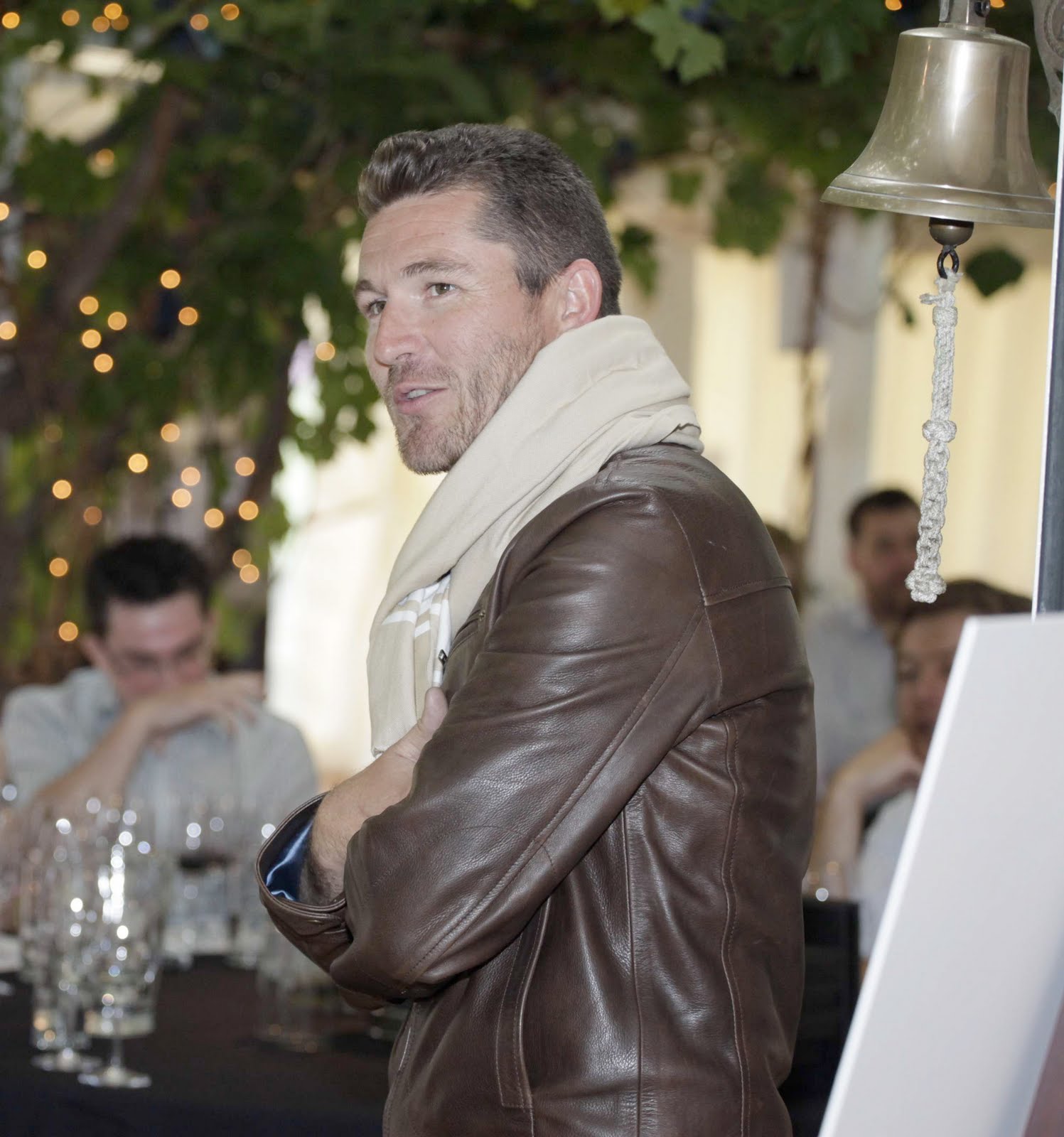
We all sit down in the club house and Audebert emerges, looking like a movie star (Ed Burns with a bit of Matthew fox thrown in) in a brown leather jacket with a pristine beige pashmina around his neck. He's even got designer stubble. I never get like this with winemakers but I'm all of a flutter, and unable to take my eyes off him. He launches into describing the five wines on show, comparing a single varietal to a violin, and a blend to an orchestra. He seems particularly fond of this comparison, and uses it several times throughout the tasting. 'Malbec is more interesting when it's blended', he admits.

First up we try the Terrazas Torrontes 2008 from Salta. I'm not a Torrontes fan - it's like chomping on a wedding bouquet, but this is light and fresh with good acidity and a lovely orange blossom finish. We move on to the Terrazas Reserva Malbec 2007, which is bursting with red currants, sour cherries and violets. Smooth on the palate, the tannins are wonderfully soft, making way for the peppery finish.

I'm trying my best to concentrate on the wines, but my eyes keep wondering back to Nicolas, still in his leather jacket and pashmina. It looks like he's just landed his own private jet on the polo pitch and I half expect a pair of Biggles goggles to fall out of his back pocket.

After the Terrazas duo, he talks us through a trio of Cheval des Andes, which he describes as 'a South American first growth', made from a blend of Malbec, Cabernet Sauvignon and Petit Verdot. The 2006 is inky purple, with an attack of pink grapefruit, violets, black cherry, black currant and vanilla. Cabernet dominant, it's silky on the palate, with fine grain tannins, smoky tobacco notes and hints of rosemary and mint on the finish. It needs time to develop. These are definitely wines for laying down.

Next up is the 2003, which wins us all over. Deep ruby, it has a warm, almost Port-like nose - you can smell the heat of the vintage, with cherries, raspberries, chocolate, leather, figs, dried fruits, tobacco and spice all in the mix. Seven years of ageing and it has come out of its shell magnificently, with a velvety palate and sweet spice on the finish. 'We used lots of Petit Verdot to give it freshness', Audbert says.

Lastly we try the 1999. A bright garnet colour, it smells like an aged Bordeaux. As soon as I get stuck in, I realise how long it's been since I tasted an old claret, and how much I miss it. This is all about the secondary notes: leather, meat, game, pencil shavings, cedar and cigar box, with tobacco, laurel and chocolate on the palate developing into a mushroomy, olive finish. There is so much going on in the glass.

It's exciting to see such complex, ageworthy wines coming out of Argentina. And that is where Audebert's challenge lies: what to take from Bordeaux and what to keep from Argentina in the blend. It would be boring to make wines that ape Bordeaux, but equally, with his classic training, he is trying to achieve the perfect balance between New World power and juiciness of fruit, and Old World elegance and freshness – the best of both worlds. After the tasting Audebert swaps his leather jacket for a polo shirt and mounts his trusty steed for a 4 chukka polo match against the Gaucho restaurant team, while we all dive into juicy steaks followed by mountains of dulce de leche ice cream.

Wednesday, 13 January 2010

Cheval Blanc and chips


As the snow continues to fall, the fine wine continues to flow at Decanter. This week we hosted a St Emilion Grand Crus Classés 2000 and 20001 tasting. When all our tasters have gone home, I get an apprentice-like call from the tasting room that goes something like: 'Lucy, the wines are ready to see you now', at which point I ping an email round the office, letting everyone know they are ready to be tasted.

To get the best stuff you've got to be quick. This time round I was lucky enough to take home 1/3 of a bottle of Cheval Blanc 2000. I was excited, having only tasted CB on two previous occasions, both of which were memorable. The first was something of a Sideways scenario. I'd been working at one of our Fine Wine Encounters and had got to take home nearly a full bottle of 2004. Walking home with a couple of friends, we passed a McDonald's.

Unable to resist the chance of a Miles moment, we strode in and ordered the obligatory burger and fries, asking for three empty cups on top of the three milkshakes we ordered. I was tasked with pouring, so began surrepticiously sliding the empty cups under the table one-by-one, which miraculously came up full. Admittedly, a plastic cup is not the ideal receptacle in which to judge one of the best wines in the world, and I think I was more in love with the idea of the wine than the wine itself, but it was a wonderfully irreverent experience.

My second brush with the white horse came at the Chateau itself. Last July I spent a week on a canal boat along the Canal du Garonnne as part of a Bordeaux travel feature. Before my travel buddy and I set sail, we took a detour to Saint Emilion. I'd managed to line up visits at Canon, Ausone and Cheval Blanc. We were due at the white horse at 2pm. Running late from our tasting at Ausone, we careered up the gravel drive lined with perfectly pruned topiary, narrowly missing the tiny white wooden sign wedged in the grass.

We parked and made our way into the chateau, and were surprised to be greeted with a library rather than a reception. Decked out in tasteful regency furniture, small dogs stood proud inside big frames. Conscious of the fact that we'd taken a wrong turn into a private part of the of the chateau, we made our way into the hall and eventually found our group.

At Canon and Angelus we had been lucky enough to have the place to ourselves, but had to tag onto a group of six affluent Americans at Cheval Blanc. In the tasting room, one of them nudged the other, exclaming in not-so-hushed tones that it was about time to see how his '82s were getting along. They both erupted with laughter. I was impatient to see which vintage would be brought out for us to taste – 2007, or '06 perhaps. Our guide came back clutching a bottle of '04. My heart flopped. Of all the vintages in recent history, it had to be the one I'd already tried.

Deflated, I lifted the glass to my nose and sniffed. Where was the wine? Had all the character ran back into the empty bottle? It was in that awkward stage in a wine's life, a few years after bottling, when it goes back into itself and quite literally clams up. All the fruit had gone, and I struggled to get anything in the way of aroma and taste. I wanted to like it, but couldn't help but be disappointed.

Fortunately, the 2000 didn't disappoint. Enjoyed in the most prosaic of surroundings (my front room), the wine had really opened up. The nose showed a fantastic array of flavours, the first thing hitting you being the lovely dried fruit aromas of prunes and figs; it almost had a Port-like character. And yet there was lots of young fruit: plums, damsons, currants, black cherries, all wrapped around smooth velvety tannins. The palate had a sweet coconutty smoothness, which I found really attractive. Some might call it over-ripe, but I was wooed. It was a little short, but delicious nonetheless, and by far my most satisfying Cheval Blanc experience.

I guess that's the joy of wine; you get to see it grow. You follow it through its infancy and support it through its awkward adolescence. With patience, you witness its metamorphosis into a confident and complex adult, layered with nuance. That's when wine becomes really exciting; when you get to see how the same wine is progressing, like reconnecting with an old friend. I've kept the bottle as a trophy. The taste still lingers like a friendly ghost.

Friday, 9 October 2009

Phillip Schofield: My Passion for Wine


I'm in Phillip Schofield’s cellar drinking a 1982 Canon. Our interview has ended and before having his photo taken, he decides it would be a good idea to crack open a claret to enjoy during the shoot. We were given strict instructions by the PR to be in and out of his Henley home in an hour. Two hours on and we haven’t taken a single picture.


Since Decanter last spoke to the 46-year-old presenter of daytime TV’s star turn This Morning a decade ago, he’s been busy amassing a 7,500-bottle cellar of superstars that would quicken the pulse of most wine lovers. Wooden cases are stacked floor to ceiling like Jenga blocks, and at every turn is a big name – Pétrus, Cheval Blanc, Ausone, Angelus, Le Pin, Lafite, DRC, Yquem – it’s hard to think of a top wine that isn’t represented. ‘It’s the only thing I’ve got into that I’m still passionate about,’ Schofield admits. ‘Over the past 10 years it’s become even more of an obsession.’ He couldn’t be more serious about wine; every bottle is logged and he faithfully keeps tasting notes for every wine he drinks. It’s a far cry from the days of presenting children’s TV with furry sidekick Gordon the Gopher.


The country house Schofield shares with his wife, Steff, and two teenage daughters has two cellars: one under the house for ‘everyday drinking’, reached via a staircase that appears out of nowhere from under the floorboards; and a ‘long-haul’ cellar under his garage. He’s going to need a third at this rate. Standing in his impressive garage cellar, it strikes me how at odds his wine obsession is with his fluffy public persona. When it comes to wine, this man means business.


Schofield’s taste leans heavily towards the Old World – ‘there’s nothing finer than a classic Bordeaux or a beautifully elegant Burgundy’ – but he does play a little in the New World. ‘I have a four-bottle allocation of Araujo in California, which I take every year. It took three years to get three bottles. The next year someone died so I got an extra bottle – it’s dead man’s shoes.’


The self-styled ‘silver fox’ has established himself among wine’s movers and shakers, and enjoys invites to the en primeur tastings in Bordeaux and decadent dinners at the likes of Latour. Having previously concurred to save face, Schofield is now confident about stating his opinion at tastings after witnessing mistakes from the top of the wine tree. ‘I took a bottle of the 1962 to Latour, and Frédéric Engerer, the MD, didn’t know what it was. That was great!’


Even though he doesn’t buy to invest – ‘I’ve never bought a bottle I intended to sell’ – Schofield keeps an eye out for bargains. ‘The city boys are all going bust so their wine is flooding the market. They drove us into this mess so we deserve the pickings of their wine.’ And in today’s delicate financial climate, he sees his cellar as his safety net. ‘If my world falls apart, my wine collection will be my pension.’


His wine heartland is Bordeaux, but he dabbles in Burgundy through Rousseau and DRC, favouring Gevrey-Chambertin, and the Rhône – Guigal’s single-vineyard Côte-Rôties are among his favourites. Despite having more than he could possibly drink, Schofield saves his top bottles for special occasions. He’s not the type to kick back and enjoy a Latour 1982 with a movie mid-week. ‘You’ve got to open your best bottles in the right frame of mind. Wine is so emotional. A friend of mine died and I thought, sod it, I’m going to open something amazing. I did and it was dreadful. A Mouton 1982. I may as well have had a coffee.’


Does having to wake up so early for work deter him from midweek drinking? ‘Steff isn’t a red wine drinker, so if I open a bottle during the week it’s going to be me drinking it. I can’t remember the last time I re-corked a bottle and drank it the next day.’ He’s healthily blasé about the Government’s nanny-state stance on drinking. ‘I don’t care what the government says about drinking. I’m fed up of being patrolled by the fun police.’


His most memorable bottle was enjoyed last year with Jancis Robinson MW, whom he cheekily calls ‘her majesty’. Schofield had organised a Cheval Blanc vertical at culinary alchemist Heston Blumenthal’s Bray pub, The Hinds Head. ‘The waiting staff staggered over from The Fat Duck with Riedel glasses’, he recalls. ‘I’d been saving this bottle of 1947 for a decade. I remember bidding for it over the phone in a lay-by in Wolverhampton. I’ve never felt more pressure than I did about opening that bottle. Thank God it performed beautifully.