Showing posts with label Cabernet Sauvignon. Show all posts

Friday, 12 April 2013

Third wine for Château Margaux


Châteaux Margaux is to release a third wine onto the market this year. As reported on db.com, Margaux de Château Margaux 2009 is made from wine that didn’t make it into the estate’s second label, Pavillon Rouge. According to Margaux’s managing director Paul Pontallier, around 3,000 cases of the wine were made, with the majority coming onto the market this autumn rather than being sold en primeur. A price for the wine has yet to be decided.

Margaux de Château Margaux was created due to the favourable conditions of the 2009 vintage, which meant that the wine that didn’t make it into Pavillon Rouge was of such a high standard it merited its own bottling. Previously, the wine had been declassified and used for generic AOC Margaux. The addition of Margaux de Château Margaux to the Margaux portfolio means the estate now produces four wines, taking the AOC Margaux into account.

Like father like son: Paul and Thibault Pontallier
As for the 2012 vintage, Pontallier told me during a tasting at the château last week that the key to a successful 2012 en primeur campaign would be finding the right price point for the grand vin. “The global market is more open than it’s ever been but we need to come out at the right price point and listen to what the market wants,” he said.

Proving that it does listen to the market, last year Margaux came out at €360 a bottle for its 2011 vintage, down 40% on the €600 release price of 2010. Composed of 87% Cabernet, Pontallier describes Margaux 2012 as sharing the concentration of 2009 and superior in quality to 2011 due to its better tannic structure, freshness and softness. Pontallier believes that while 2012 Margaux is drinking well early, it is “built for the next 50 years.”

While he was pleased with the quality of Margaux’s top wine, quality was by no means uniform across the board, with more AOC Margaux made in 2012 than any previous vintage. “For us the vintage was very heterogeneous, with different levels of quality and style. For our best terroirs, it was an outstanding vintage for Cabernet, but it didn’t ripen well in the lesser terroirs in the region,” he said. 

Friday, 1 June 2012

Sex therapist launches low-alcohol wine to “arouse”


American sex therapist Dr Ruth Westheimer has launched a line of low-alcohol wines to help “relax” and “arouse” couples. Vin d'Amour Chardonnay, Zinfandel and Cabernet Sauvignon contain 6% alcohol, compared to the average 12.5%, along with Westheimer’s smiling face on the label. "My idea is that just the right amount of alcohol will awaken your senses and arouse you," the 83-year-old Holocaust survivor told the New York Post.
"I'm always saying couples should drink to relax, but not too much. If the woman drinks too much, she falls asleep and if the man drinks too much, he can't perform. It's the same problem for gay couples. With this low-alcohol wine, I am saying: ‘Relax, but don’t drink too much.’ If sex follows or not, it doesn’t matter. It’s about finding and communicating with a significant other,” she added. 
The wines, made from grapes grown in California, will go on sale in New York grocery stores and delis in early July priced at US$7.99-9.99 per bottle, with a portion of the profits going to the Museum of Jewish Heritage. Gilt, a high-end Manhattan restaurant in the New York Palace Hotel, will also stock her Cabernet Sauvignon. 
“A little bit of alcohol is welcome as it makes people not only relax, but communicate better,” Westheimer told the Post, adding, “They will talk about their feelings, their hopes and their dreams easier than without alcohol, because there is less censure. But when people get drunk there is no way they can be good lovers,” she added. 
The pint-sized octogenarian has also launched a lingerie line, a book – Sexually Speaking, and Dr Ruth popcorn. The German-born therapist, who has 56,500 followers on Twitter, caused a sensation in the ‘80s with her straight-talking phone-in radio shows offering sexual advice. She also had a TV show, Ask Dr. Ruth, which aired worldwide.

Wednesday, 9 May 2012

Coppola releases first Inglenook since 1964


Filmmaker-turned-winemaker Francis Ford Coppola has released the first wine bearing the Inglenook label since the Napa Valley estate was broken up in 1964. As reported on db.com, a year ago, Coppola successfully reclaimed the Inglenook trademark so that his Rubicon Estate in Rutherford could revert back to its historic original name. At the same time, he hired winemaker Philippe Bascaules, previously of Bordeaux first growth Château Margaux, as estate manager and winemaker, with Stéphane Derenoncourt continuing as consultant winemaker for the estate.

Inglenook was founded in 1880 by Gustave Niebaum, a Finnish sea captain who used his enormous wealth to import the best European grapevines to Napa. The estate’s 1941 Inglenook Cabernet is considered one of the greatest Californian wines ever made. When Coppola first purchased part of the famed property in 1975 with his wife Eleanor, the Inglenook estate had long since been broken up and its name sold off. The Coppolas spent the next twenty years reuniting the vineyards and restoring winemaking to the historic estate.

The new retro label, designed by a retired US Mint artist, is almost an exact replica of the Inglenook Cabernet label from the late ‘50s, featuring the façade of the estate. The choice of the 2009 Cask Cabernet as the first wine to bear the new label is fitting. Cask Cabernet is a tribute to the Inglenook Cabernet Sauvignon of the John Daniel, Jr. era during the ‘30s and ‘40s that spawned many of Inglenook’s greatest vintages ever produced. “When I tasted the 2009 vintage, I recognised the incredible potential of this property and understood Coppola’s desire to bring the quality of the wines to their fullest potential,” said Bascaules.

In keeping with the trend for authenticity reported earlier this week on Wine and the City, Inglenook’s estate wines will also return to their historical labels. The 2009 Cask Cabernet will be available in the US and other international markets in two weeks. In addition to the Cabernet Sauvignon, Inglenook is also planted with Zinfandel, Cabernet Franc, Merlot, Petit Verdot and Syrah, along with three hectares of white Rhône varieties that produce the estate's flagship white, Blancaneaux.

Tuesday, 17 April 2012

Cannabis wine catching on in California

A number of California winemakers are secretly producing wines laced with cannabis, with Cabernet Sauvignon the grape variety of choice for the blend, thedrinksbusiness.com reports. “Pot wine is increasingly fashionable in wine country – much of the marijuana used for the wine comes from California’s weed capital Humboldt County,” Crane Carter, president of the Napa Valley Marijuana Growers said. “Cabernet Sauvignon from the Stag’s Leap district is thought to pair particularly well with pot,” Carter added.

According to Carter, pot wine delivers a quicker high than pot brownies, and the combination of alcohol and marijuana produces “an interesting little buzz.” He believes cannabis wine has a bright future in Napa, but for the moment, producers are making the wine in small quantities to be shared in “convivial moments with like-minded people,” according to wine writer Mike Steinberger.

Offered a cannabis cuvée at a Burgundy dinner in New York, Steinberger describes it as having “a pungent herbal aroma that called to mind a college dormitory on a Saturday night – that, or a Grateful Dead concert.” One Californian producer, who chose not to be named, said cannabis-laced wine is “the only truly original style of wine created in the New World.” He is just one of a number of winemakers on the Central Coast who are blending two of California’s most prized crops.

To make cannabis wine, one pound of marijuana is dropped into a cask of fermenting wine, which yields around 1.5 grams of pot per bottle; the better the raw materials, the better the wine. The alcohol from the fermentation process extracts the THC – the major psychoactive compound – from marijuana. Some producers opt for maximum extraction, keeping the wine in barrel for nine months before bottling it. In the ‘80s, weed wine was typically made with rosé, with bottles selling for more than US$100 due to the legal risk involved.

Today, possession of one ounce (28.5g) or less of marijuana in California is punishable by a maximum US$100 fine with no criminal record. Medical marijuana was legalised in the state in 1996. Cultivation of any amount of marijuana is a felony, though people who grow for personal use are eligible for diversion so long as there is no evidence of intent to sell. Would you be curious try cannabis wine?

Monday, 16 April 2012

Château Lafite

Wine and the City talks to Christophe Salin, managing director of Domaines Barons de Rothschild, at the Château Lafite 2011 en primeur tasting in Bordeaux, about the character of Lafite 2011, why prices need to come down this year, and Lafite's new vineyard venture in China.

Wednesday, 15 February 2012

Garage Wine Company

Wine and the City talks to Quentin Tarantino look-alike Derek Mossman Knapp of the Garage Wine Company at Quo Vadis in Soho, about his old vine Carignan project, the potential for sparkling wine in Chile, and why the future of Chilean wine lies in the mountain regions.

Sunday, 5 February 2012

Wine of the Week: Ornellaia 2008

Welcome to a new section of Wine and the City – Wine of the Week, where each week I will taste and rate a different wine from around the world. While I’ll endeavour to make the majority affordable and accessible, I’m starting the section on a high note with a very special wine, Ornellaia Bolgheri Superiore 2008.

One of the three so-called “Super Tuscans”, along with Sassicaia and Solaia, it’s easy to forget the estate of Tenuta dell’Ornellaia was founded a mere 31 years ago in 1981 by Lodovico Antinori, who chose an unspoilt patch in the hills near the medieval hamlet of Bolgheri, set in a triangle formed by the Tyrrhenian Sea, Bolgheri and the town of Castagneto Carducci. The ambition was to create fine wines to rival the best in the world. Since establishing the estate, Lodovico has passed the baton on to current owner, the Marchesi de Frescobaldi.

Ornellaia Bolgheri Superiore is the estate’s flagship wine, produced since 1985 from select, hand picked parcels across the estate’s 97 hectares of limestone-rich calcerous soils. Made from a blend of 54% Cabernet Sauvignon, 27% Merlot, 16% Cabernet Franc and a 3% dash of Petit Verdot, while showing beautifully now, the 2008 vintage is one for lying down. The 2008 growing season was marked by a wet spring, which lead to low yields of high concentration. The summer was hot, but temperatures cooled at night, allowing for the development of colour, aromatics and phenolic ripeness in the Cabernet Sauvignon, resulting in a bold, structured wine built for ageing.

Crafted by German winemaker Axel Heinz, after the grapes are gently crushed, the wine is fermented in French oak barrels (70% new) then aged in small barriques for 18 months, followed by a year of bottle ageing. An intense deep purple, the nose is full of ripe blackberries and black cherries alongside tobacco, balsamic and herbal notes, and hints of dark chocolate, mocha, tar and spices. The Cabernet dominant palate is dense, concentrated, textured and giving. Fleshy, soft and opulent, with a sweetness to the fruit, it’s a Rubens of a wine, with velvety, fine-grained tannins and a lightening bolt of minerality running through it. Firm yet racy, with a liquorice finish and incredible length, it’s a clever balance of power and elegance made very much in the international style, which will go on happily for 20 years.

Wine and the City rating: 18/20.

Ornellaia Bolgheri Superiore 2008 is available from Berry Bros & Rudd, Harper Wells and The Wine Society for £100-120 a bottle.

Friday, 20 January 2012

Cabernet a "cornerstone for Chile's future"

Australian winemaker and consultant Brian Croser has spoken out in praise of Chilean Cabernet Sauvignon, calling it “a cornerstone for the future of Chilean wine.” As reported on thedrinksbusiness.com, speaking at the inaugural South American Wine Workshop in London, organised by Santa Rita Estates, Croser said Chilean Cabernet was even more distinctive than Napa Cabernet.

“Chilean Cabernet Sauvignon is completely unique and can’t be replicated. Its unmistakable Cabernet nature is a real advantage for Chile, and a strength to build upon,” Croser said. “The best examples are subliminal, with grainy tannins that impart a savoury note on the finish,” he added, warning that the big challenge for Chilean vintners is to learn how to tame their tannins. “They’re a long way off at the moment,” he admitted.

Croser believes the uniqueness of Chilean Cabernet comes from the extreme differences between day and night temperatures, which gives the grapes longer to build up pyroxene and phenols, allowing for the steady build up of tannin. “Chile has recognised the challenge of the Cabernet varieties and the unusually high diurnal range of the terroirs and continues to refine the vineyard management, creating some of the world's most unique and distinctive Cabernets with subliminal briarines and evolved savoury tannins,” he said.

He referred to the Cabernet family of grapes, including Cabernet Sauvignon, Cabernet Franc, Merlot and Carmenere as “Chile’s backbone”, calling Cabernet Franc the “mother grape” and imparter of the green gene. “Chile’s fine wine future lies in refining its traditional Cabernet offering from the Central Valley and at the same time exploring what the county’s other terroirs have to offer,” he said, citing Chile’s “matrix of terroir” as having great potential for other noble grape varieties, including Riesling, Syrah, Chardonnay and Sauvignon Blanc.

He also name-checked Temuco as a region to watch, predicting it will become an important place for sparkling wine production. “The future of Chilean sparkling wine lies in the south, towards the mountains, in drier areas like Temuco. I’m certain there’s a future for Chilean sparkling wine down there, all we need is a producer brave enough to start planting,” he said.

Meanwhile, Chilean wine expert Peter Richards MW spoke out in defence of Carmenere, calling it “a first division grape" that speaks of its origins. “We have to remember how new it is. Quality will increase in time and lots of different kinds of Carmenere will emerge, as it’s a naturally varied variety,” Richards said. Tim Atkin MW also defended the grape: “I’m coming round to it, especially in blends. The problem with Carmenere is its green character, which needs to be addressed. The trick is being able to manage the tannin,” he said.

Tuesday, 17 January 2012

Yao Ming wine arrives in China

China's burgeoning interest in fine wine is set to get another boost thanks to the arrival of the first batch of Yao Ming 2009 Napa Valley Cabernet Sauvignon into the country. As reported on thedrinksbusiness.com, the much-hyped wine is ready for sale at 3,800 yuan (£384) a bottle, but none of the 1,200 bottles will be sold on the open market. According to China Daily newspaper, Ming’s wine will only be distributed among high-end consumers.

Made through the former basketball player's wine company – Yao Family Wines – the Cabernet Sauvignon grapes come from six vineyard plots in California’s Napa Valley. The 7 foot 6 sport star, who retired from the Houston Rockets in July with a personal net worth of over US$65 million, announced the debut of Yao Ming Wine in November. Along with winemaking, Ming has also moved into politics, taking his seat on Sunday as a new member of the standing committee of Shanghai's political advisory body during its annual session.

He is not the only celebrity in China targeting the booming fine wine market. Chinese movie star Zhao Wei bought the 7-hectare Château Monlot in Bordeaux’s St Emilion region for around €4m last December. It has been reported that she will sell the wine in China. Celebrities investing in the wine industry are hoping to generate profits from the exuberant Chinese market.

However, experts warn that they will need to pay attention to quality in order to maintain custom and establish a good reputation. "For Yao Ming, it was a good marketing strategy to create his own-brand wine. However, it will take a long time for customers to recognise the intrinsic value of the wine and believe it is worthwhile buying," said marketing expert Shu Guohua. "As a Chinese person, I think it will be better for Yao to invest in white spirits. The market demand for white spirits in China is much larger than for red wine,” Guohua added.

Friday, 13 January 2012

World's first meteorite-aged wine launched

An Englishman working in Chile has launched what is believed to be the first wine aged with a meteorite formed during the birth of the solar system. As reported on thedrinksbusiness.com, Norwich-born Ian Hutcheon (pictured) has released a Cabernet Sauvignon called Meteorito aged with a 4.5 billion-year-old meteorite from the Asteroid Belt between Mars and Jupiter. The extra-terrestrial wine was created at Hutcheon’s Tremonte Vineyard in the Cachapoal Valley in Chile.

“I’ve been involved in wines and astronomy for many, many years and I wanted to find some way of combining the two,” Hutcheon said. “When you drink this wine, you are drinking elements from the birth of the solar system,” he added. Belonging to an American collector, the three-inch meteorite is believed to have crashed into the Atacama Desert in northern Chile around 6,000 years ago.

“The idea behind submerging it in wine was to give people the chance to touch something from space; the very history of the solar system, and feel it via a grand wine,” Hutcheon said. In April 2010, Cabernet Sauvignon grapes were picked from his mountain vineyard, planted on an old gold mine 100km south-west of Chile’s capital Santiago.

The fruit was then fermented for 25 days, before undergoing malolactic fermentation for 12 months – it was during this process that the wine was held in a wooden barrel with the meteorite, before being blended with another batch of Cabernet Sauvignon. Hutcheon believes the meteorite gives the wine a “livelier taste”.

Meteorito Cabernet Sauvignon is currently only sold at the Centro Astronomico Tagua Tagua – an observatory launched by Hutcheon in 2007, but the winemaker is keen to export it to other countries, including the UK. Around 10,000 litres of the wine have been made.

Saturday, 25 June 2011

Torres

Wine and the City and Adam Lechmere of Decanter.com taste two Torres greats: Grans Muralles 2007 and Mas La Plana 1996 at the Torres HQ in Villafranca del Penedès just outside Barcelona. Torres was the 2002 Decanter Man of the Year and was recently honoured with a lifetime achivement award by The Drinks Business.

Thursday, 26 May 2011

Ridge

Wine and the City and West London Wine on tour in California. Part 4: Ridge. We visit the acclaimed winery set high atop the Santa Cruz mountains and are lucky enough to do a mini Monte Bello comparative tasting, beginning with the 2007 and moving on to the exquisite 1999. It doesn't get much better than this!

Saturday, 25 September 2010

Cheval des Andes tasting at Ham Polo Club


Last Wednesday Nicolas Audebert, winemaker for the Mendoza-based Terrazas de los Andes, flew into town to host a vertical tasting of Cheval des Andes – a joint venture between Terrazas and Château Cheval Blanc in St Emilion.

The tasting, quite appropriately, took place at Ham Polo club in Richmond, where Audebert must have felt at home. He's such a polo nut he built a polo pitch in the middle of one of his vineyards in Mendoza.

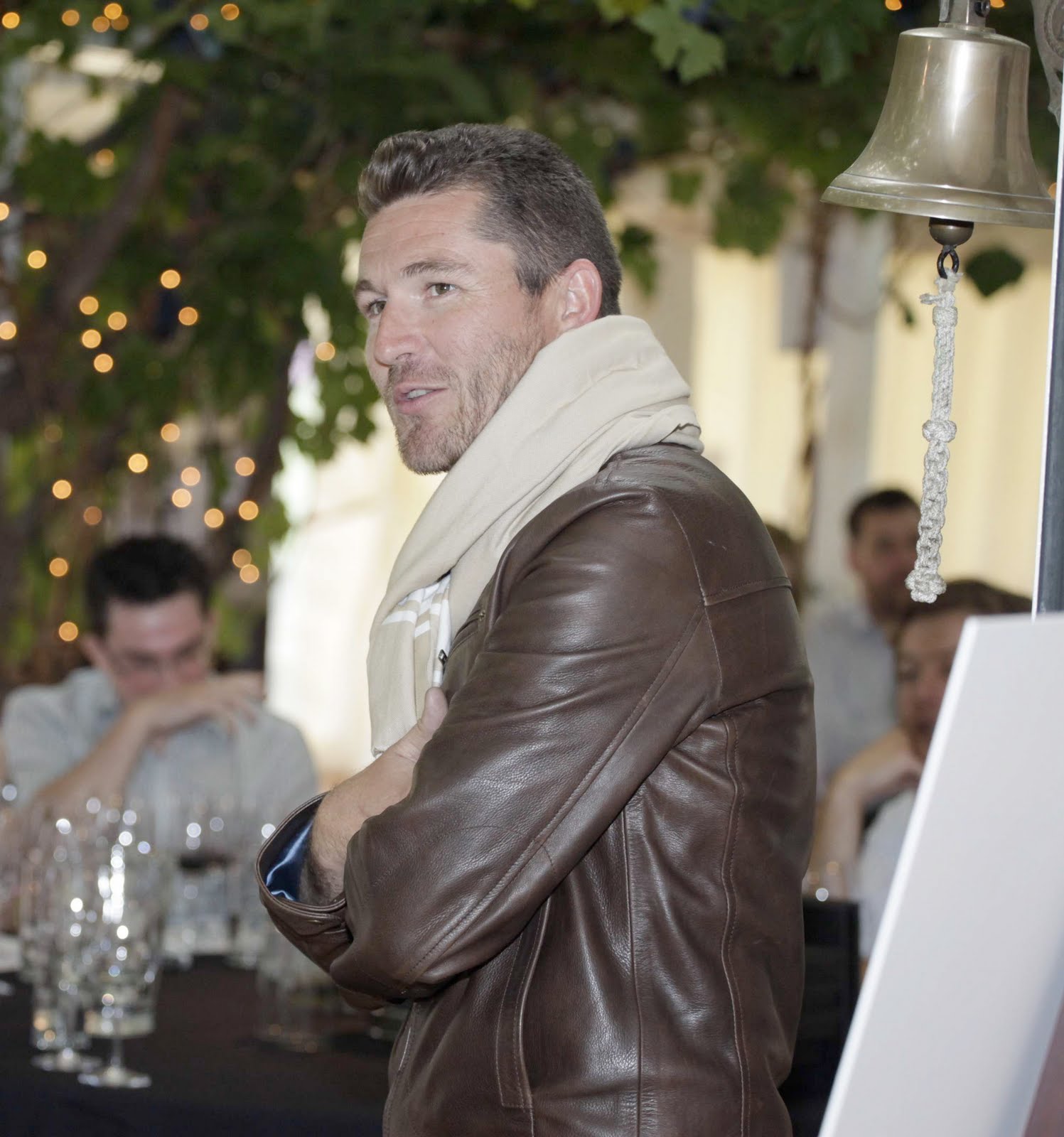
We all sit down in the club house and Audebert emerges, looking like a movie star (Ed Burns with a bit of Matthew fox thrown in) in a brown leather jacket with a pristine beige pashmina around his neck. He's even got designer stubble. I never get like this with winemakers but I'm all of a flutter, and unable to take my eyes off him. He launches into describing the five wines on show, comparing a single varietal to a violin, and a blend to an orchestra. He seems particularly fond of this comparison, and uses it several times throughout the tasting. 'Malbec is more interesting when it's blended', he admits.

First up we try the Terrazas Torrontes 2008 from Salta. I'm not a Torrontes fan - it's like chomping on a wedding bouquet, but this is light and fresh with good acidity and a lovely orange blossom finish. We move on to the Terrazas Reserva Malbec 2007, which is bursting with red currants, sour cherries and violets. Smooth on the palate, the tannins are wonderfully soft, making way for the peppery finish.

I'm trying my best to concentrate on the wines, but my eyes keep wondering back to Nicolas, still in his leather jacket and pashmina. It looks like he's just landed his own private jet on the polo pitch and I half expect a pair of Biggles goggles to fall out of his back pocket.

After the Terrazas duo, he talks us through a trio of Cheval des Andes, which he describes as 'a South American first growth', made from a blend of Malbec, Cabernet Sauvignon and Petit Verdot. The 2006 is inky purple, with an attack of pink grapefruit, violets, black cherry, black currant and vanilla. Cabernet dominant, it's silky on the palate, with fine grain tannins, smoky tobacco notes and hints of rosemary and mint on the finish. It needs time to develop. These are definitely wines for laying down.

Next up is the 2003, which wins us all over. Deep ruby, it has a warm, almost Port-like nose - you can smell the heat of the vintage, with cherries, raspberries, chocolate, leather, figs, dried fruits, tobacco and spice all in the mix. Seven years of ageing and it has come out of its shell magnificently, with a velvety palate and sweet spice on the finish. 'We used lots of Petit Verdot to give it freshness', Audbert says.

Lastly we try the 1999. A bright garnet colour, it smells like an aged Bordeaux. As soon as I get stuck in, I realise how long it's been since I tasted an old claret, and how much I miss it. This is all about the secondary notes: leather, meat, game, pencil shavings, cedar and cigar box, with tobacco, laurel and chocolate on the palate developing into a mushroomy, olive finish. There is so much going on in the glass.

It's exciting to see such complex, ageworthy wines coming out of Argentina. And that is where Audebert's challenge lies: what to take from Bordeaux and what to keep from Argentina in the blend. It would be boring to make wines that ape Bordeaux, but equally, with his classic training, he is trying to achieve the perfect balance between New World power and juiciness of fruit, and Old World elegance and freshness – the best of both worlds. After the tasting Audebert swaps his leather jacket for a polo shirt and mounts his trusty steed for a 4 chukka polo match against the Gaucho restaurant team, while we all dive into juicy steaks followed by mountains of dulce de leche ice cream.

Tuesday, 27 July 2010

Video: Tasting of Katnook Founders Block Cabernet Sauvignon


Wine and the City and Jimmy Smith of the West London Wine School taste Katnook Founders Block Cabernet Sauvignon, Coonawarra, 2007. You can find the wine at Bibendum for £9.99.

Katnook Estate was founded by a Scot, John Riddoch, in 1890. Originally called the Coonawarra Fruit Colony, Riddoch planted 140 acres of vines on the estate. His first vintages were modest affairs – the wines were made in a wool shed.


Today Katnook is one of the most esteemed domains in Coonawarra. Its vineyards are planted in Terra Rossa soil, spanning 330 hectares in the heart of this remote region in South Australia.


Video: Tasting of Vergelegen Cabernet Sauvignon Merlot


Wine and the City and Jimmy Smith of the West London Wine School taste Vergelegen Cabernet Sauvignon Merlot, Stellenbosch, 2007, made by outspoken South African winemaker Andre van Rensburg. You can find the wine at Majestic for £10.99.