Showing posts with label Bordeaux. Show all posts

Friday, 12 April 2013

Third wine for Château Margaux


Châteaux Margaux is to release a third wine onto the market this year. As reported on db.com, Margaux de Château Margaux 2009 is made from wine that didn’t make it into the estate’s second label, Pavillon Rouge. According to Margaux’s managing director Paul Pontallier, around 3,000 cases of the wine were made, with the majority coming onto the market this autumn rather than being sold en primeur. A price for the wine has yet to be decided.

Margaux de Château Margaux was created due to the favourable conditions of the 2009 vintage, which meant that the wine that didn’t make it into Pavillon Rouge was of such a high standard it merited its own bottling. Previously, the wine had been declassified and used for generic AOC Margaux. The addition of Margaux de Château Margaux to the Margaux portfolio means the estate now produces four wines, taking the AOC Margaux into account.

Like father like son: Paul and Thibault Pontallier
As for the 2012 vintage, Pontallier told me during a tasting at the château last week that the key to a successful 2012 en primeur campaign would be finding the right price point for the grand vin. “The global market is more open than it’s ever been but we need to come out at the right price point and listen to what the market wants,” he said.

Proving that it does listen to the market, last year Margaux came out at €360 a bottle for its 2011 vintage, down 40% on the €600 release price of 2010. Composed of 87% Cabernet, Pontallier describes Margaux 2012 as sharing the concentration of 2009 and superior in quality to 2011 due to its better tannic structure, freshness and softness. Pontallier believes that while 2012 Margaux is drinking well early, it is “built for the next 50 years.”

While he was pleased with the quality of Margaux’s top wine, quality was by no means uniform across the board, with more AOC Margaux made in 2012 than any previous vintage. “For us the vintage was very heterogeneous, with different levels of quality and style. For our best terroirs, it was an outstanding vintage for Cabernet, but it didn’t ripen well in the lesser terroirs in the region,” he said. 

Tuesday, 6 November 2012

Costco to sell fine wine in the UK


Costco’s director of wine buying Annette Alvarez-Peters may have caused controversy earlier this year when she slammed wine as “just a beverage” and “no different than toilet paper,” but the company – the world's largest wine retailer – is on a fine wine offensive in the UK. News has emerged this week, as reported on db.com, that Costco is branching out into the UK market, having launched a UK website, Costco.co.uk, selling high-end wines and spirits.

Open to both Costco members and non-members, the site, which went live last week, features a 131-strong wine and spirits range, including Champagne big guns Cristal, Krug and Dom Pérignon, and classed growth Bordeaux from the acclaimed 2009 vintage. Topping the offering is a bottle of Taylor’s Scion Tawny Port dating back to 1855 housed in a bespoke crystal decanter, which is on sale for £1,599.99.
 
Meanwhile, a single bottle of Château L’Eglise Clinet Pomerol 2009 is priced at £339.99, while the same vintage of “flying fifth” Château Pontet-Canet is going for under a third of the price at £99.99. At the value end, a bottle of Saint-Julien estate Gruaud Larose’s second wine, Sarget de Gruaud Larose 2009, is priced at £18.49, while Haut Médoc estate Château Senejac 2009 costs just £15.49.

Among the sprits on sale are Patrón Tequila, Ciroc Vodka, Johnnnie Walker Blue Label, Courvioiser Cognac and English Vodka brand Chase. Delivery is free, and Costo’s online customers will be treated to exclusive offers. It will be interesting to track how Costco.co.uk performs. The UK wine market is a crowded place, and in order to thrive, a merchant’s offering has to be both compelling and unique.

New York-based online merchant Lot18 is a recent casualty, closing its UK operation in July after just four months, blaming the supermarkets’ stranglehold on the UK market and a lack of anticipated growth for its exit. Is Costco.co.uk appealing enough to lure customers away from the might of the supermarkets, Majestic, and the increasing number of savvy online-only merchants entering the market? Only time will tell.

Friday, 5 October 2012

Bordeaux Wines dinner with The London Foodie


In our ever-experimental age, food and wine pairings are becoming increasingly daring. Gone are the days of sticking rigidly to lazy, hackneyed alliances, like white wine and fish, or Port and blue cheese. The doors of opportunity have been flung open and all sorts of strange combinations are popping up – London foodies and winos have been howling with delight for hotdogs and grower Champagne at James Knappett and Sandia Chang's charmingly irreverent Bubbledogs. 


To illustrate that Bordeaux needn't be relegated to meat-heavy main courses, the ever dapper London Foodie Luiz Hara invited a ravenous bunch of food and wine hacks into his cosy East London home for a five-course Japanese feast, enlisting the help of glamourous wine glugger Christina Pickard to pair each of the dishes with a different Bordeaux wine, from white, to rosé, to red, to sweet. I've been lucky enough to eat at many of London's most hotly-anticipated new openings in the past few years and can honestly say that Luiz' food could stand shoulder-to-shoulder with the best of them.


Thoughtfully presented and elegantly scented, his dishes were meticulously executed and full of flavour. Among the highlights was the opening plate of salmon sashimi served with an American twist in the form of wasabi infused soured cream, though the dish that will linger longingly in the mind is the Woody Allen-esque Deconstructing Sushi, formed of grilled scallops, Tobiko eggs, spicy sauce and sushi rice – a composition of such richness, creaminess and alluring beauty, I was tempted to steal my neighbour's shell and suck out the goodness.


As for the wines, while the Réserve de Sours Sparking Rosé NV proved a curiously delightful pairing for the popcorn flavoured with Japanese Seven Spices doing the rounds in Luiz' living room before we ventured down to the kitchen, the standout wine was the creamy, unctuous and beautifully textured Château Roquefort Blanc Roquefortissime 2008 – sounds like a cheese, tasted sensational, and a steal at just £12.99 from Waitrose – I'm debating buying the entire allocation at my local Chiswick branch and I'm not even a Sauvignon girl. The toasty, spicy, apricot-laced Ginestet Sauternes 2009 also pleased the crowd, especially when enjoyed with decadent dark chocolate cake.


Huddled around a table of die hard gastronauts, conversation inevitably turned to food, and soon after, a competition to see who could come up with the wittiest food-related film puns. Many a suggestion was thrown into the ring, from There's Something About Dairy to Silence of the Clams. In my finest hour, I offered Beef Encounter and The Prawn Supremacy. Leaving Luiz' replete and happy, the memory of the Roquefortissime endured. Bordeaux whites are largely under the radar, though there are many gems to be unearthed displaying the holy trinity of Semillon, Sauvignon Blanc and judiciously judged oak.

Thursday, 16 August 2012

Hedonism Wines

Tomorrow a temple of fine wine opens in London. The Russian-owned Hedonism Wines in Mayfair boasts various vintages of all of the five first growths, along with Domaine de la Romanée-Conti, Super Tuscans Sassicaia and Ornellaia, Screaming Eagle, Pétrus, Le Pin and many other of the finest wines available to humanity.


Run by Alistair Viner, Harrods' ex head wine buyer, the most expensive single bottle on sale is Château d'Yquem 1811 at an eye-watering £100,000.  I was lucky enough to be invited to the press launch on Monday night. Descending into the cavernous basement, on catching sight of the giant large format bottles on display, from Domaine de Chevalier Blanc 2000 to Château Pichon Baron Longueville 2005, I felt like Alice in Wonderland after she'd imbibed the 'Drink Me' shrinking potion. Hedonism is more Ferrari showroom than fine wine mecca.   


Turning a corner, I stumble across a Surrealist cave filled with sinister hands, from Mickey Mouse gloves to lobster claws gripping the bottles in a scene straight out of a Salvador Dalí and André Breton film, with a little Labyrinth and David Lynch thrown in for good measure. Taking another turn into the unknown, I enter what looks like a forest filled with wine bottles taken captive in the corkscrew-like twisted branches.


Stopping to drink in the curious mise-en-scène, I hear a squeak and watch one of the bottles move of its own accord. It's all very Lord of the Rings – I half expect Frodo Baggins to come bounding in barefoot. Though most of the liquid treasures remain unaffordable to mere mortals, Hedonism is worth a visit for the experience alone. With so many iconic bottles on show – their lusted after labels naked and exposed – it's a wine lover's delight. Go forth and drool...

Wednesday, 15 August 2012

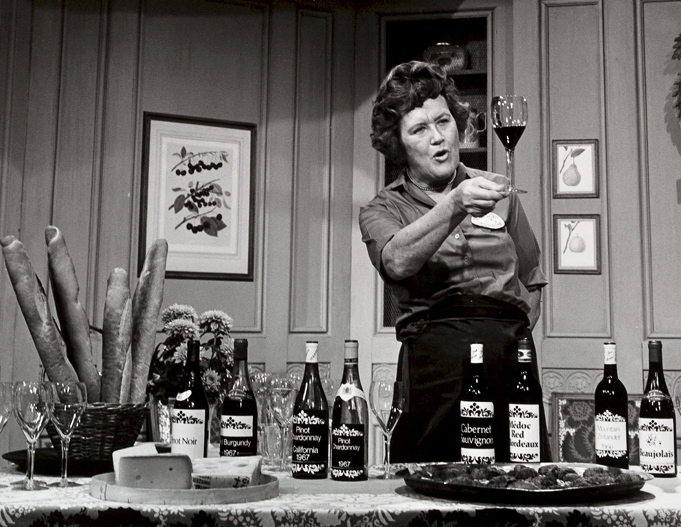
Julia Child loved fine wine as much as food


Clearly a woman of impeccable taste, American TV chef and author Julia Child was as passionate about fine wine as she was good food, and had a weakness for Château d’Yquem, Chablis, Chambertin and classed growth Bordeaux, db.com has revealed.

Speaking to The Oregonian on the eve of what would have been Child’s centenary on 15 August, close friend and travel companion Pat Pratt said: “Julia had a weakness for Château d'Yquem, especially when served with Grand Marnier soufflé or crème brulée, but she also paired it with foie gras or pâté.”

“We went to visit the château in Bordeaux and were leaning over the well in the center of the courtyard. We both lost our sunglasses down that well,” she added. Child also had a penchant for white Burgundy, and is quoted as saying: "I would happily die with a bottle of white Burgundy in my mouth.” She had a particular fondness for the minerality of Chablis, which she’d pair with lobster and oysters.

A lifelong wine lover, Child is best known for her 1961 debut cookbook, Mastering the Art of French Cooking, which features a chapter on wine. Her husband, Paul, was a wine educator who kept well-stocked cellar. Keen to enhance her wine knowledge and improve her tasting skills, Child was a member of Burgundian wine society La Confrérie des Chevaliers du Tastevin.

She indulged her passion for wine by visiting vineyards in Bordeaux, Burgundy, Italy, Alsace and California. "At every vineyard we visited, Julia and I would always taste one grape from the end of the row. We weren't supposed to, but we did," Pratt told The Oregonian. "When we had really good meals together, I would ask for the label off the bottle,” she added.  

A big Bordeaux lover, Child showed a preference for Château Palmer, Château Lafite and St Emilion Grand Cru Classé Ausone, which she once visited. Despite a love of wine, Child was strict about not indulging while at work – the glasses she raised at the end of her TV shows were filled with coloured water. For her 40th birthday, Child enjoyed roast duck and 1926 Gevrey-Chambertin, and lusted after Domaine de la Romanée-Conti, which she only got to drink once.

In Mastering the Art of French Cooking, Child recommends Château La Mission Haut-Brion with veal, Corton-Charlemagne with beef, Volnay with brie and Grands-Echézeaux with veal kidneys. A number of events organised by Les Dames d'Escoffier, an international society of professional women in the fields of food, wine and hospitality, are taking place across the US today to honour Child’s centenary.

Wednesday, 25 July 2012

Tesco to start selling Lafite


In an ambitious move into fine wine, supermarket giant Tesco is to start selling Château Lafite and other classed growth Bordeaux as part of a new fine wine offer both in store and online. As reported on db.com, beginning with the much-lauded 2009 vintage, other wines to go on sale at a select few branches of Tesco will be first growth Château Mouton-Rothschild, flying fifth Pontet-Canet, St-Emilion’s Cheval Blanc and Cos d’Estournel in St-Estèphe.

“The wine was shipped sometime ago, we’re just trying to decide what to call the offer at the moment, as it won’t be an en primeur offering,” Tesco’s director for beers, wines and spirits Dan Jago told db, insisting he has “good quantities” of all of the wines, and that the duty paid prices will be “very competitive.” “We made the move as some of our customers were asking for certain fine wines we didn’t stock,” he said.

The wines will be available by the bottle and mixed case at the end of the summer in 25-30 of Tesco’s most upmarket stores around the UK. “I want to offer them as single bottles as we want to deter investors. We want the wine to be bought by the people who are going to pop the cork,” Jago added. Every little helps…  

Tuesday, 3 July 2012

Calon-Ségur sold… apparently

Bordeaux third-growth Calon-Ségur is rumored to have been sold for an estimated £135 million. As reported on db.com, Pétrus owner Jean-Francois Moueix is alleged to have been involved with the sale, though a spokesperson at Duclot, the négociant house owned by Moueix, was unable to confirm his involvement to the drinks business. Pétrus ambassador Elizabeth Jaubert was also unable to confirm the sale, telling the drinks business: “This is the first I have heard of it.”


Calon-Ségur's current owners were also unable to verify that an acquisition had taken place. The purchase would include 95 hectares in Saint-Estèphe, encompassing Calon-Ségur, second label Marquis de Calon and cru bourgeois Capbern-Gasqueton. Calon-Ségur’s future has been in the balance since the death of owner Denise Capbern-Gasqueton last September at the age of 87. Gasqueton ran the estate, which has been owned by the Gasqueton family since 1894, after the death of her husband in 1995.

According to The Wine Spectator, several sources claim that the long-anticipated transaction is well underway and that Jean-Francois Moueix has brought in an investor. When Château Montrose’s then-owner, Jean-Louis Charmolüe, decided to sell in 2006, Moueix brought in billionaires Martin and Olivier Bouygues. At the time, Jean-Francois and his brother, Christian Moueix, owner of Château La Fleur-Pétrus, acquired minority stakes in Montrose. In July 2010 Jean-Francois bought out another minority shareholder for £1.6m.

There has not been any indication as to whether Moueix has acquired a stake in Calon-Ségur himself. The estate has passed through several owners, including Nicolas-Alexandre, Marquis de Ségur, who aslo owned Château Laftie and Château Latour at the time. Its signature heart-shaped label is a lasting reminder of the Marquis’ famous quote: "I make my wine at Lafite and Latour, but my heart is in Calon." One of the original three vineyards of Saint-Estèphe, in the early 19th century, Château Montrose was a forestland parcel belonging to Calon-Ségur.

Monday, 11 June 2012

Saignée method rosé “not true rosé”


François Millo, president of the Provence Wine Council, has slammed saignée-method rosé as “not true rosé.” Speaking to the drinks business at the London International Wine Fair, Millo said: “People who make saignée rosé are opportunists. In their mind they are making red wine – the rosé just happens to be a by-product. The saignée method is a bad way of making rosé. The wine is more of an afterthought, very few people in Provence use it.
“85% of the wine we produce in Provence is rosé, so it’s at the top of our priority list – our grapes are grown for rosé,” Millo added. The saignée method (meaning “bleeding” in French), involves making rosé as a by-product of red wine fermentation, where a portion of the pink juice from the grape must is removed at an early stage, which is then fermented separately to produce rosé.
Millo favours the skin contact method, where black grapes are lightly crushed and the skins remain in contact with the juice for 1-3 days. The must is then pressed and the skins discarded. Millo said that rosé producers in Provence are aiming for the lightest colour possible without compromising the flavour profile, in response to consumer demand. 
“There’s a strong demand for the signature pale onion skin colour assocaited with Provence. Consumers see a lighter colour as a sign of quality,” he said, adding, “We’ve worked really hard recently on methods which allow us to extract the maximum flavour while keeping the wine as light in colour as possible. Techinques like night harvesting and macerating at lower temperatures have helped.”  
Millo has seen exports of Provence rosé surge in the US, up 20% on last year, with China and Brazil also proving lucrative markets. Despite its recent success, he feels the rosé category is still lacking both a recognised vocabulary and a world expert. “Rosé is the hardest wine to taste – there is no specific vocabulary for the flavours and aromas and no world expert specialising in rosé,” Millo admitted. 
Asked whether he is keen for rosé to be taken more seriously as a wine style, Millo warned of the dangers of naval gazing. “We want our wines to be taken seriously, but we don’t want to take ourselves too seriously. Bordeaux started taking itself seriously and it got boring,” he said. 

Friday, 11 May 2012

Rudy Kurniawan indicted


Alleged wine counterfeiter Rudy Kurniawan has been indicted by a federal grand jury in New York on four counts and faces extradition to the East Coast state. As reported on db.com Kurniawan was formally accused by the jury of mail and wire fraud to sell counterfeit wine, defrauding a finance company, double pledging collateral, and scheming to defraud a California wine collector and a New York auction house.


The charges were filed by the US Attorney for the Southern District of New York. Kurniawan, 35, has been held at the Metropolitan Detention Center in Los Angeles since his arrest by the FBI on 8 March at his home. According to a source in the US Department of Justice, Kurniawan will be imminently extradited to New York in a government plane by a federal marshal.


The indictment details how Kurniawan, an Indonesian national, allegedly “assisted in the creation of counterfeit wines” in a home laboratory. It describes Kurniawan as a wizard at concocting fake wines by mixing and matching younger, less valuable wines “that mimicked the taste, colour and character of rare and expensive wines.” 


The indictment alleges that during a search of his home, the FBI found evidence of numerous bottles being counterfeited, including a California Pinot Noir that Kurniawan had marked as “40’s/50’s DRC, ” referring to Burgundy estate Domaine de la Romanée-Conti. Agents also found thousands of counterfeit labels for wines dating as far back as 1899, including labels for all the Bordeaux first growths as well as Burgundies such as Domaine Ponsot. 

The home operation was fitted out with hundreds of used corks, foil capsules and hardened wax which, when heated, could seal the mouths of bottles. There were also hundreds of rubber stamps for vintage dates, ranging from Château Latour 1899 to Screaming Eagle 1992. The FBI also found empty bottles of fine and rare wines ready to be filled and “recycled”. Several shipments of empty bottles were mailed to Kurniawan at his request by a New York restaurant he frequented.


Two auctions play a major part in the case against Kurniawan. In April 2008, 22 lots of purported Domaine Ponsot wines were withdrawn at the insistence of Laurent Ponsot, proprietor of the Burgundy estate, from an Acker Merrall & Condit sale. This February, 78 bottles of wine listed as DRC were withdrawn from a Spectrum auction in London. The indictment alleges the wines were fakes, consigned by a paid “straw man” for Kurniawan.


If Kurniawan were to be convicted on all charges, he could face up to 100 years in jail. More likely, according to sentencing guidelines, he would face 87 to 108 months. Asked about his client’s state of mind, Kurniawan’s lawyer, Michael Proctor of Caldwell Leslie & Proctor said: “He’s strong, very strong.”

Monday, 16 April 2012

Château Lafite

Wine and the City talks to Christophe Salin, managing director of Domaines Barons de Rothschild, at the Château Lafite 2011 en primeur tasting in Bordeaux, about the character of Lafite 2011, why prices need to come down this year, and Lafite's new vineyard venture in China.

Tuesday, 10 April 2012

Cazes and Lurton to lower their prices

Sylvie Cazes, director of Château Pichon Longueville Comtesse de Lalande, has admitted that prices for the Bordeaux 2011 vintage will have to come down to a reasonable level. “Prices must come down, but it’s a case of what’s reasonable – we’re looking at 10-15%”, she told the drinks business at the château’s en primeur tasting last week.

“Our 2010 prices were up 10% on 2009, so there’s no question we have to come down as 2011 isn’t as spectacular a vintage,” Cazes (above) added, emphasising that she wants a quick campaign this year, and for prices to be released in time for Vinexpo Hong Kong at the end of May. Despite being in the shadow of 2009 and 2010, Cazes is confident about the quality of Pichon 2011: “It has good acidity, wonderful freshness, good structure and depth,” Cazes said, admitting that the secret to success in 2011 was avoiding over-extraction.

She compared the vintage to both 2001 and 2008, describing it as softer than the former and more concentrated than the latter. “Sorting was vital to success – we had our team picking berry by berry,” she said. As to whether the Asian market was losing interest in Bordeaux, Cazes is unconvinced: “People say the Chinese are moving on to Burgundy and the Rhône but we’re expecting a swarm of visitors in the next two weeks. “They’ve latched onto the fact that primeurs runs for three weeks and are visiting either side of the main week,” she said.

In Sauternes, Pierre Lurton (right), director of Château d’Yquem, revealed the superb quality of 2011 Yquem was the “big surprise” of the vintage. The abnormal weather conditions in 2011, including a rainy August, lead to a rare burst of noble rot creating fully botrytised grapes. “Our 2011 Yquem is better than both 2009 and 2010. The wines have 145g of residual sugar but retain amazing freshness and balance,” he said, comparing the vintage to both 2001 and 2005, and describing the wines as having “the purity of a diamond.”

In terms of pricing for the reds, including Château Cheval Blanc, which he also runs, Lurton agrees that they must come down. “2011 is not the same story as 2009 and 2010 – a different positioning is needed. The Bordelais should lower their prices by at least 20-30%,” he admitted.

Thursday, 29 March 2012

Château Guiraud awarded organic logo

Grand Cru Sauternes Château Guiraud has been awarded the Agriculture Biologique (AB) farming logo – France’s national logo for organic products since 1985. As reported on thedrinksbusiness.com, The 2011 vintage will be the first Grand Cru Sauternes to carry the logo, and one of the only châteaux in the Bordeaux 1855 classification to be certified organic. Products carrying the logo must contain more than 95% organic components, and be produced within the EU.

The château started to experiment with organic farming 15 years ago and today uses no artificial pesticides, fertilisers or herbicides in the production of the sweet wine. In 1996, fed up with constant chemical treatment of his own private 15 hectares of vineyards, director of the property Xavier Planty decided he wanted to work differently. Learning the ropes with a 12ha vineyard, he suffered a number of setbacks, but working alongside an agricultural engineer, he began to regenerate the soil with liquid manure to replenish the grassy vegetation that grows naturally around vine stock.

“Rather than feed the soil with fertiliser, we feed it with bacteria; it’s easy to go bio,” Planty said. “Illnesses such as mildew are closely monitored, and with weather conditions known up to a week in advance, treatment can be giving preventively. It’s incredible to see how the fauna and flora have returned,” he added. An insect census of Château Guiraud’s 100 hectares of vineyards found 635 different varieties, compared to fewer than 200 in “conventional” vineyards.

To help expand biodiversity, 3.7 miles of hedges have been planted to help protect insects and feed them in spring. The multiplication of insects which feed on vine predators has allowed Planty to dispense completely with insecticides since 2004. While Guiraud was the first Bordeaux grand cru to experiment with organic growing, Saint-Emilion Grand Cru Château Fonroque was first to win the organic label in 2006.

The Aquitaine region is the third largest in France to experiment with organic vineyards, behind Languedoc-Roussillon and Provence in southwestern and southern France respectively. Aquitaine now has 300 organic-certified estates and 400 working towards certification. Organic vineyard area in France doubled between 2007 and 2010, then increased again by 28% between 2009 and 2010 to 50,268 hectares.

Friday, 16 March 2012

Lafite winery in China underway

Domaines Barons de Rothschild has begun construction of a winery in Penglai in China’s Shandong province in order to capitalise on the thirst for fine wine in Asia. As reported on thedrinksbusiness.com, in partnership with CITIC East China Group, the new winery, in the only coastal wine producing area in Asia, is expected to produce 120,000 bottles of wine a year.

After fifteen years of research on grape planting in Asia, Lafite selected the port town of Penglai as the optimum site for its Chinese property. The company has invested £10m in the 1.73 hectare winery, and the accompanying 25 hectare estate. A completion date for the project has yet to be given. Lafite will plant different kinds of grapes in accordance with soil constituents, without the use of chemical fertilisers.

“The world’s top luxury brands are all very interested in the Chinese market, Rothschild is no exception,” said Zhang Lu, a Shanghai-based analyst at Capital Securities Corp. Outside France, Lafite also owns Bodegas Caro in Argentina and Viña Los Vascos in Chile. Penglai has a quality grape growing area of more than 10,000 hectares.

Wine production in the region has doubled to 140,000 tons in 2011 from 2005, while the number of winemakers increased to 70 from 39 in the same period. Chinese wine imports meanwhile, were worth over US$1.27bn last year, after an annual increase of 88%. According to the latest figures from Vinexpo, Asia is on course to become the world’s second biggest market for wine within the next three years.

Chinese consumers will increase the amount of wine they drink by 54% by 2015 as consumption reaches 1.9 to 2 liters per person, the Vinexpo study found. The value of wine purchases may outpace volume in the next four years, helped by high-end consumption in China, which is now the fifth largest wine market by volume.