Showing posts with label Malbec. Show all posts

Thursday, 3 May 2012

Hurtado: Peru is the next big wine country

Adolfo Hurtado, chief winemaker of Cono Sur, has revealed he thinks Peru has the potential to be the world’s next big wine region and is looking for vineyard land in the country. “Peru has the same high altitude and ocean influence as Chile, I’d love to make wine there,” he told the drinks business. “Peru has no frost and in many parts is desert-like and dry, the same as northern Chile. It’s such an interesting country with great winemaking potential,” he added. 

Hurtado revealed that he has made a number of trips to the country in search of vineyard land, but has yet to buy anything. If he were to make wine there, he says he would stick to the country’s native grapes over international varieties. Martin Morales, the half-Peruvian, half-British founder of newly-opened Peruvian restaurant Ceviche in Soho, is equally fired up about Peruvian wine and keen to add a couple to his list.

“I’ve got my eye on a Peruvian white blend, which I’m desperately trying to get into the UK to show Londoners what Peru can do in terms of winemaking. The reds need work, but some of the whites are delicious, I’m really excited about them,” he said. There are five different vineyard regions in Peru: the North Coast, the Central Coast, the South Coast, the Andean Sierra and the Selva.

Of the 11,000 hectares of vineyards in the country, the most important lie in the Central and South Coast where the best known wines, like Tacama, Vista Alegre and Ocucaje are produced. The coastal region of Peru is desert, intersected by a series of valleys flowing from the Andes down to the sea. The best vines are grown in these fertile areas, which benefit from the cool currents of offshore air that rise up into the vineyards. The balance between the humidity and daily contrasts in temperature provide exceptional vine growing conditions.

Hurtado meanwhile, also aims to make his winery, Cono Sur, the second biggest wine brand in Chile after Casillero de Diabolo in terms of global recognition. The brand is relaunching its Bicycle, Reserva and Visión ranges with new packaging, as Hurtado felt the message behind the wines “wasn’t clear enough.” The company is also adding a Malbec and Pinot Grigio to its Bicycle range. “I’m really excited about the Malbec – it’s a deep purple colour, almost black, and is concentrated and full of sweet black fruit like an Argentinian Malbec,” he said.

Wednesday, 14 March 2012

Mood and wine matching

Forget food and wine matching, 2012 is all about mood and wine matching. Wine retailer Oddbins has launched a new website where customers can select wines according to their mood. As reported on thedrinksbusiness.com, the site features suggested wine pairings for times of passion, contemplation and even adversity, along with wines suited to staying in, going out, or celebrating.

After a bad date, the site suggests drowning your sorrows with a bottle of Morellino di Scansano Ventoso 2010, preferably while listening to Portishead. It also recommends “writing your life story” with the help of a bottle of Bourgogne Pinot Noir 2009 Nuiton-Beaunoy, and a zippy Quinta de Azevedo Vinho Verde 2010 while watching motor racing.

The quirky new site offers a music pairing for each of its wines, from Taylor Swift (above) with Montemar Malbec, and Elbow with Grange Des Roc Blancs 2009, to Abdullah Ibrahim “after a long birthday dinner” with Churchill’s 10 Year Old Tawny Port. For less mood-driven consumers, the site also features the more conventional categories of country, grape, price and style.

The retailer plans to increase the number of wines on the site from 100 to 500 in the coming weeks. "E-commerce is an extremely important part of the new Oddbins. The design and content of the new website is in keeping with the Oddbins philosophy of making wine as accessible as possible for consumers,” said managing director Ayo Akintola.

Love it or loathe it, Oddbins is at least making an effort to inject a bit of fun and humour into wine buying. Wine desperately needs to reach out to younger consumers, and music matching is an ideal way of making wine more appealing to a younger audience. Most of us pick wines to suit our mood, albeit subconsciously, in the same way a song will strike a chord one day and jar the next. I’ve yet to put the music and wine matching theory to the test – have any matches worked for you?

Tuesday, 13 March 2012

Argentina needs to “focus on whites”

Argentina needs to start focusing more on its white wines, according to one of the country’s top producers. As reported on thedrinksbusiness.com, Alberto Arizu of Bodega Luigi Bosca believes there is a real opportunity for high-end white blends in Argentina, and Chardonnay from the Uco Valley.

Speaking at a lunch hosted by Bancroft Wines at Gaucho in Piccadilly, Arizu (above) said: “We’ve shown the world that Argentina can do reds, now it’s time to prove our worth with our whites. Chardonnay is the second most important white grape in Argentina and we’re discovering new areas to plant it, like Lujan de Cuyo. Argentinian Chardonnay has a unique character to Chile and other New World examples."

Arizu cited the bodega’s Gala 3, a premium blend of Chardonnay, Viognier and Riesling, as an example of what Argentina can do outside Torrontés. “We’re one of the few bodegas to be working on premium white blends, and are reducing the amount of time our Chardonnays stay in oak.” He pinpointed Chardonnay from the Uco Valley as having improved “tremendously” in the past few years, producing some of the best examples of the grape. “The quality has gone through the roof. You get more freshness at the higher altitude,” he said.

Though he also sees a chance for Torrontés to quench a global thirst for freshness. “We need to ride the wave of the global demand for fresh, aromatic, dry whites – Torrontés is ideally placed to satisfy this thirst,” he said. Arizu also spoke of the importance of seeking out and shouting about Argentina’s best micro regions for Malbec. “Malbec differs greatly depending on where it’s planted. Those from the Uco Valley are floral and fresh, the Vistalba and Lujan de Cuyo examples are red fruited, while Malbecs from Las Compuertas are full bodied, spicy and complex.

“We need to communicate these terroir differences to consumers so they understand the diversity of styles of Malbec. We’re not shouting about it enough,” he asserted. Malbec aside, Arizu is keen to focus on Pinot Noir and Syrah in Argentina, both of which have huge potential but remain largely undiscovered. “Our challenge will be to develop these grapes in the most suitable terroirs, like Maipú and San Juan for Pinot,” he said.

Arizu described the Asian market as “where Brazil was 20 years ago,” but spoke of the “great potential” Argentinian wine has in China with the new generation. “They are better educated about wine and more open-minded to trying new things. The best way to promote our wines will be with the quality/price message,” he said. “A Wines of Argentina office opened in Beijing last year, which will be hugely important in spreading the word about our wines in Asia. More wine brands need to have a presence in China in order to open the category up,” he admitted.

Thursday, 23 February 2012

Wine comes to McDonald's in Mendoza

Mendoza outlets of McDonald’s have started selling wine as part of a value meal. Billed as the "Sabores Mendocinos" menu, the meal, on sale for 47 Argentine pesos (£6.86), includes a double-patty Angus beef burger, two meat empanadas and a 187mL bottle of Bodega Santa Julia Malbec. The label describes the wine as "an intense, balanced wine with aromas of red fruits and spices." I’m lovin’ it.

Wednesday, 23 November 2011

Cheval des Andes at Villa d'Este

Wine and the City tastes two Argentinian gems: Terrazas de los Andes Afincado Single Vineyard Malbec 2007 and Cheval des Andes 2007 with estate manager Hervé Bernie-Scott at Villa d'Este on Lake Como during the World Wine Symposium 2011.

Saturday, 25 September 2010

Cheval des Andes tasting at Ham Polo Club


Last Wednesday Nicolas Audebert, winemaker for the Mendoza-based Terrazas de los Andes, flew into town to host a vertical tasting of Cheval des Andes – a joint venture between Terrazas and Château Cheval Blanc in St Emilion.

The tasting, quite appropriately, took place at Ham Polo club in Richmond, where Audebert must have felt at home. He's such a polo nut he built a polo pitch in the middle of one of his vineyards in Mendoza.

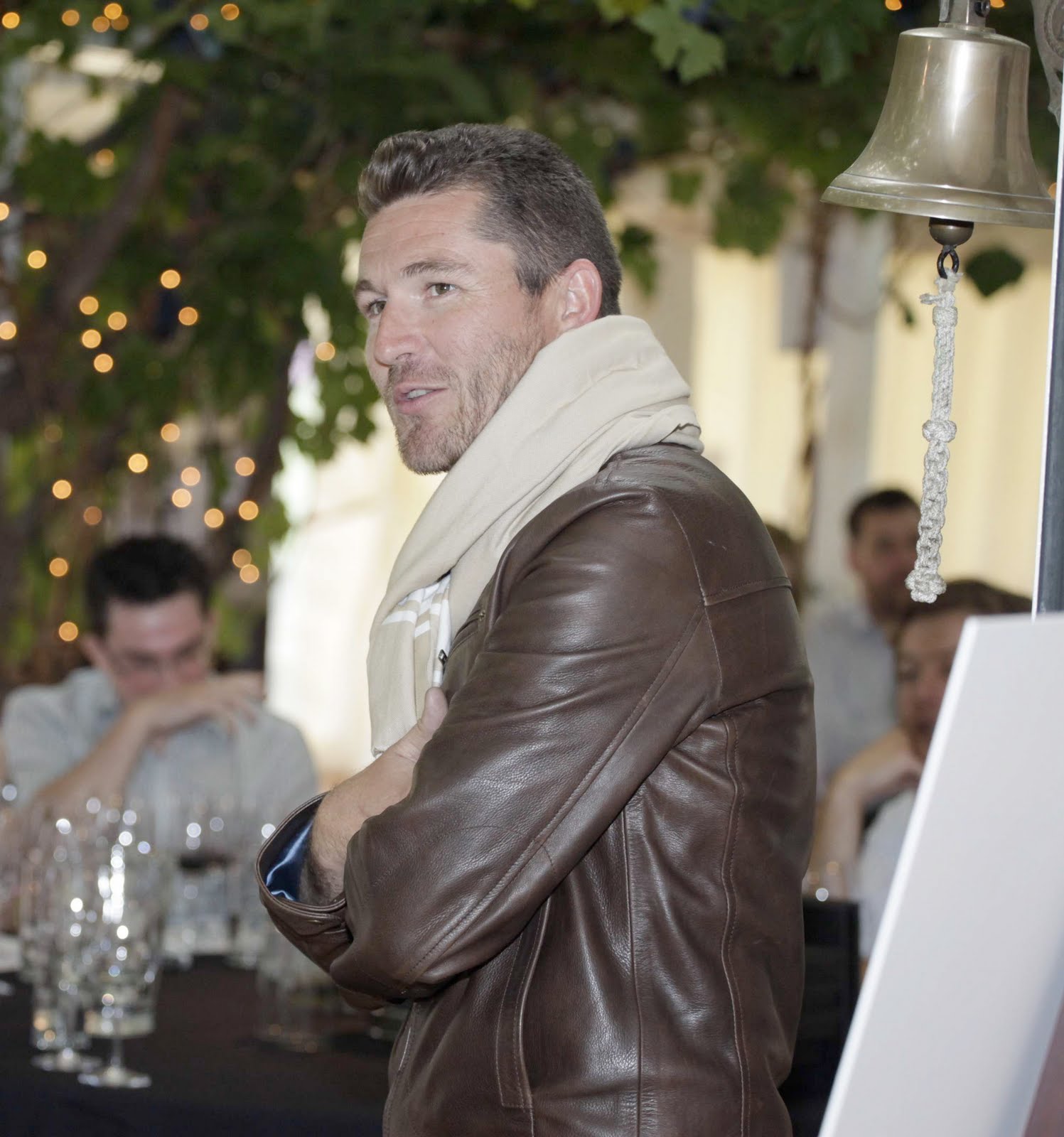
We all sit down in the club house and Audebert emerges, looking like a movie star (Ed Burns with a bit of Matthew fox thrown in) in a brown leather jacket with a pristine beige pashmina around his neck. He's even got designer stubble. I never get like this with winemakers but I'm all of a flutter, and unable to take my eyes off him. He launches into describing the five wines on show, comparing a single varietal to a violin, and a blend to an orchestra. He seems particularly fond of this comparison, and uses it several times throughout the tasting. 'Malbec is more interesting when it's blended', he admits.

First up we try the Terrazas Torrontes 2008 from Salta. I'm not a Torrontes fan - it's like chomping on a wedding bouquet, but this is light and fresh with good acidity and a lovely orange blossom finish. We move on to the Terrazas Reserva Malbec 2007, which is bursting with red currants, sour cherries and violets. Smooth on the palate, the tannins are wonderfully soft, making way for the peppery finish.

I'm trying my best to concentrate on the wines, but my eyes keep wondering back to Nicolas, still in his leather jacket and pashmina. It looks like he's just landed his own private jet on the polo pitch and I half expect a pair of Biggles goggles to fall out of his back pocket.

After the Terrazas duo, he talks us through a trio of Cheval des Andes, which he describes as 'a South American first growth', made from a blend of Malbec, Cabernet Sauvignon and Petit Verdot. The 2006 is inky purple, with an attack of pink grapefruit, violets, black cherry, black currant and vanilla. Cabernet dominant, it's silky on the palate, with fine grain tannins, smoky tobacco notes and hints of rosemary and mint on the finish. It needs time to develop. These are definitely wines for laying down.

Next up is the 2003, which wins us all over. Deep ruby, it has a warm, almost Port-like nose - you can smell the heat of the vintage, with cherries, raspberries, chocolate, leather, figs, dried fruits, tobacco and spice all in the mix. Seven years of ageing and it has come out of its shell magnificently, with a velvety palate and sweet spice on the finish. 'We used lots of Petit Verdot to give it freshness', Audbert says.

Lastly we try the 1999. A bright garnet colour, it smells like an aged Bordeaux. As soon as I get stuck in, I realise how long it's been since I tasted an old claret, and how much I miss it. This is all about the secondary notes: leather, meat, game, pencil shavings, cedar and cigar box, with tobacco, laurel and chocolate on the palate developing into a mushroomy, olive finish. There is so much going on in the glass.

It's exciting to see such complex, ageworthy wines coming out of Argentina. And that is where Audebert's challenge lies: what to take from Bordeaux and what to keep from Argentina in the blend. It would be boring to make wines that ape Bordeaux, but equally, with his classic training, he is trying to achieve the perfect balance between New World power and juiciness of fruit, and Old World elegance and freshness – the best of both worlds. After the tasting Audebert swaps his leather jacket for a polo shirt and mounts his trusty steed for a 4 chukka polo match against the Gaucho restaurant team, while we all dive into juicy steaks followed by mountains of dulce de leche ice cream.