Monday, 17 September 2012
Kurniawan lawyers seek to omit FBI evidence
Thursday, 16 August 2012
Hedonism Wines
Wednesday, 15 August 2012
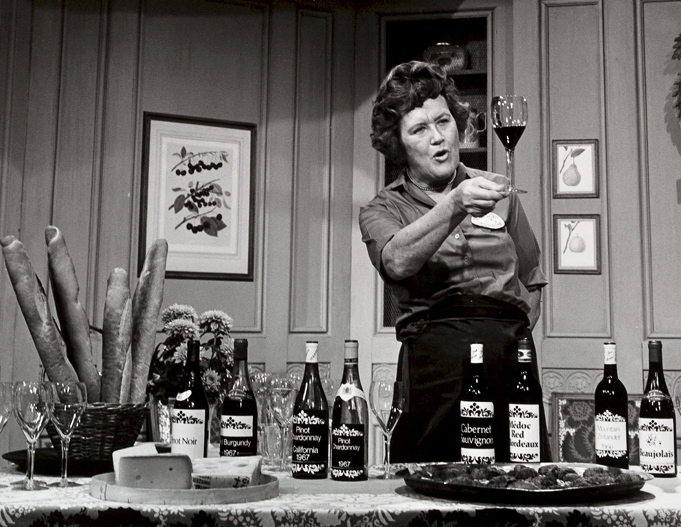
Julia Child loved fine wine as much as food
Thursday, 14 June 2012
Ponsot: “Rudy Kurniawan had an accomplice”
Friday, 11 May 2012
Rudy Kurniawan indicted
Thursday, 12 January 2012
Domaine Dujac
Friday, 6 January 2012
Lafite '08 down 45% as fine wine prices fall

The value of Lafite 2008 is down 45% on last year, as 2011 fine wine prices showed their most dramatic slide since 2008. As reported on the drinks business, according to Liv-ex, prices of the 100 top-traded wines fell by an average 22.5% between June and December last year – the steepest fall since the beginning of the recession nearly four years ago. Lafite ‘08 peaked in January 2011 at £14,043 a case, but was trading this month at £8,108, while Lafite 2009 has dropped 28% in value in the last six months, from £13,831 a case in July 2011 to £9,800 in December 2011.
Year to date prices for Lafite 2008 were already down 26% last August with the wine proving the worst performer in terms of price of the last 10 physical vintages from the estate. This is in stark contrast to October 2010, when the price of Lafite ’08 shot up by 20% overnight after it was announced bottles would be marked with the Chinese symbol for the number 8, regarded as lucky in China.
Meanwhile, the Live-ex Claret Chip, consisting of Bordeaux first growths from top vintages going back to the mid-‘80s was down 26% in the second half of 2011. The second wines of the first growths have also performed poorly, with Château Margaux’s Pavillon Rouge 2008 down by nearly 50%. Carruades de Lafite 2008 fared better, but still lost 29% of its case price. Though Carruades 2005 is holding up well, selling for £3,672 in June 2011 and £3,054 last month.
Bucking the trend are top second growths like Leoville-Las-Cases and Cos d’Estournel, which have maintained their value and outperformed the falling market. Outside first growth claret the picture is slightly rosier, with Burgundy’s Domaine de la Romanee Conti, Chateau d’Yquem and Super Tuscan Sassicaia the strongest brands in 2011.
Why the change? According to WineSociete China, China’s leading organisation for wine education, it can be put down to China’s money supply. In 2009, Chinese banks made almost 10 trillion yuan in new loans, expanding the country’s loan portfolio by a third. In 2010 they lent almost 8 trillion yuan, roughly twice as much as in 2008. Trillions of yuan, formerly locked up in bank reserves, flowed into the economy, leading Chinese consumers to put their rapidly depreciating currency into hard assets like fine wine.
Last year, money supply growth and lending in China fell sharply as Beijing put the brakes on asset and consumer price inflation. As lending has declined, so have sources of credit for many of China's local and privately owned enterprises. In an attempt to generate liquidity, fine wines are quietly being offered for sale by many Chinese collectors.
Monday, 2 January 2012
Julio Iglesias interview
Julio Iglesias doesn’t do things by half. During his 42-year music career, the Madrid-born singer has sold more than 300 million albums in 14 different languages, making him among the top 10 best-selling musicians in history. Last year, the 66-year-old, who has reportedly slept with over 3,000 women, released album number 77, and he’s currently midway through a world tour – ‘It’s a great excuse to drink wines from different countries every night,’ he says, laughing.
His speech is littered with huge numbers – a million dollars here, 800 million pesetas there, and I quickly get the impression that Iglesias’ world is one in which money is no object. ‘I used to spend more than a million dollars a year on wine,’ he tells me, in a genuinely casual, rather than boastful way. The singer has bought so much wine over the years that he seems to have lost count of how many bottles he has in his three cellars in Spain, Miami and the Dominican Republic.
‘I’ve got about 5,000 top wines and hundreds of thousands of normal wines,’ he admits, without hyperbole. Generous with his plentiful stock, he gives away about 100 cases of wine to friends every year and thinks nothing of cracking open a bottle of Pétrus 1982 after a concert to share with his band. Isn’t it wasted on the uninitiated? ‘Not at all,’ he counters. ‘They’ve all become wine connoisseurs and have built cellars too. The vodka days are over!’
It was in the summer of ’82 that Iglesias tried to buy the acclaimed Ribera del Duero estate Vega Sicilia. ‘I was having dinner with friends in Madrid and it came up in conversation that Vega Sicilia was on the market for 800 million pesetas (around US$6m back then). I got on the phone to them the next morning, but it was too late.’ The winery had already been sold to a Venezuelan family, who went on to sell it to the Alvarez family, the current owners. ‘It wasn’t my lucky day, I guess,’ Iglesias says wistfully.
Vega Sicilia aside, he insists he’s not just a trophy collector – wine has shaped his outlook on life. ‘My understanding of life has become much stronger and clearer through my appreciation of wine,’ he says, describing spending those millions on wine in the ’80s as: ‘the best thing I ever did in my life’. Brought up in Madrid in the '50s by his doctor father, Iglesias got by in the early days by drinking ‘any old stuff from Valdepeñas’. In his late teens he played as a goalkeeper for Real Madrid football club, until a near fatal car accident in 1963 ended his sporting career. During his rehabilitation, to develop dexterity in his hands, he started playing the guitar and subsequently, writing music.
Iglesias’ wine epiphany was equally notable. In 1973 he was invited by Baroness Philippine de Rothschild – a big Iglesias fan – to a dinner party at her home in Paris after one of his concerts. ‘She asked me what I thought of the wine and I told her that I’d never tasted anything like it,’ Iglesias recalls with brio. ‘She summoned the butler to serve a second wine, this time in a decanter, which I later learned was Lafite 1961. It was the first time in my life I’d felt a wine all the way down to my toes. It worked its magic through my body and made me realise that wine had a lot more mystery and history than I had first thought’.
The memory of the Lafite lingered, sending Iglesias on a lifelong wine journey. He began picking up the odd case in the countries he toured in – reds in France, whites in Germany – and got seriously into collecting in 1978, after building a 4,000-bottle cellar in the Miami home he shares with his second wife and their five children. He grew his cellar by seeking out bargains at New York merchant Sherry Lehmann. ‘In the late ’70s you could still get hold of great 1947s and 1961s. The ’75s were coming onto the market and I started spending a lot of money on Bordeaux, buying up all the Pauillac, Pomerol, Graves and Margaux I could get my hands on. Before you can appreciate great Burgundy, you’ve got to cut your teeth on good Bordeaux’.
Outside of France, Iglesias collects Spanish icon wines from Rioja and Ribera del Duero, particularly (perhaps still longingly) Vega Sicilia, as well as Pesquera, Pingus and CVNE Imperial. ‘I’ve recently got much more interested in Spanish wines’, he tells me. ‘I love trying wines from lesser-known Spanish regions like Calatayud, Jumilla and Zamora’. He dips his toe in the New World via Australia, South Africa, California and Argentina, but his wine heartland is very much Bordeaux and Burgundy. ‘My latest obsession is Pinot Noir,’ he tells me excitedly. ‘Romanée-Conti from a good year is absolutely unforgettable. When made well it’s so approachable young. You don’t have to wait for it, which is great, because I don’t have too much time.'
Article originally published in Decanter magazine
Wednesday, 16 February 2011
Champagne Mumm lunch at The Ritz
Friday, 9 October 2009
Phillip Schofield: My Passion for Wine

I'm in Phillip Schofield’s cellar drinking a 1982 Canon. Our interview has ended and before having his photo taken, he decides it would be a good idea to crack open a claret to enjoy during the shoot. We were given strict instructions by the PR to be in and out of his Henley home in an hour. Two hours on and we haven’t taken a single picture.
Since Decanter last spoke to the 46-year-old presenter of daytime TV’s star turn This Morning a decade ago, he’s been busy amassing a 7,500-bottle cellar of superstars that would quicken the pulse of most wine lovers. Wooden cases are stacked floor to ceiling like Jenga blocks, and at every turn is a big name – Pétrus, Cheval Blanc, Ausone, Angelus, Le Pin, Lafite, DRC, Yquem – it’s hard to think of a top wine that isn’t represented. ‘It’s the only thing I’ve got into that I’m still passionate about,’ Schofield admits. ‘Over the past 10 years it’s become even more of an obsession.’ He couldn’t be more serious about wine; every bottle is logged and he faithfully keeps tasting notes for every wine he drinks. It’s a far cry from the days of presenting children’s TV with furry sidekick Gordon the Gopher.
The country house Schofield shares with his wife, Steff, and two teenage daughters has two cellars: one under the house for ‘everyday drinking’, reached via a staircase that appears out of nowhere from under the floorboards; and a ‘long-haul’ cellar under his garage. He’s going to need a third at this rate. Standing in his impressive garage cellar, it strikes me how at odds his wine obsession is with his fluffy public persona. When it comes to wine, this man means business.
Schofield’s taste leans heavily towards the Old World – ‘there’s nothing finer than a classic Bordeaux or a beautifully elegant Burgundy’ – but he does play a little in the New World. ‘I have a four-bottle allocation of Araujo in California, which I take every year. It took three years to get three bottles. The next year someone died so I got an extra bottle – it’s dead man’s shoes.’
The self-styled ‘silver fox’ has established himself among wine’s movers and shakers, and enjoys invites to the en primeur tastings in Bordeaux and decadent dinners at the likes of Latour. Having previously concurred to save face, Schofield is now confident about stating his opinion at tastings after witnessing mistakes from the top of the wine tree. ‘I took a bottle of the 1962 to Latour, and Frédéric Engerer, the MD, didn’t know what it was. That was great!’
Even though he doesn’t buy to invest – ‘I’ve never bought a bottle I intended to sell’ – Schofield keeps an eye out for bargains. ‘The city boys are all going bust so their wine is flooding the market. They drove us into this mess so we deserve the pickings of their wine.’ And in today’s delicate financial climate, he sees his cellar as his safety net. ‘If my world falls apart, my wine collection will be my pension.’
His wine heartland is Bordeaux, but he dabbles in Burgundy through Rousseau and DRC, favouring Gevrey-Chambertin, and the Rhône – Guigal’s single-vineyard Côte-Rôties are among his favourites. Despite having more than he could possibly drink, Schofield saves his top bottles for special occasions. He’s not the type to kick back and enjoy a Latour 1982 with a movie mid-week. ‘You’ve got to open your best bottles in the right frame of mind. Wine is so emotional. A friend of mine died and I thought, sod it, I’m going to open something amazing. I did and it was dreadful. A Mouton 1982. I may as well have had a coffee.’
Does having to wake up so early for work deter him from midweek drinking? ‘Steff isn’t a red wine drinker, so if I open a bottle during the week it’s going to be me drinking it. I can’t remember the last time I re-corked a bottle and drank it the next day.’ He’s healthily blasé about the Government’s nanny-state stance on drinking. ‘I don’t care what the government says about drinking. I’m fed up of being patrolled by the fun police.’
His most memorable bottle was enjoyed last year with Jancis Robinson MW, whom he cheekily calls ‘her majesty’. Schofield had organised a Cheval Blanc vertical at culinary alchemist Heston Blumenthal’s Bray pub, The Hinds Head. ‘The waiting staff staggered over from The Fat Duck with Riedel glasses’, he recalls. ‘I’d been saving this bottle of 1947 for a decade. I remember bidding for it over the phone in a lay-by in Wolverhampton. I’ve never felt more pressure than I did about opening that bottle. Thank God it performed beautifully.