Showing posts with label Pinot Noir. Show all posts

Thursday, 11 October 2012

South Africa: time to talk terroir


Terroir needs to be at the top of South Africa’s agenda according to one of the country’s leading Pinot Noir producers, Anthony Hamilton Russell, owner of Hamilton Russell Vineyards in Walker Bay. “South Africa needs to sort out its terroir message in order for it to be taken seriously as a fine wine producing country. It will help us promote our fine wine offering. The importance of terroir very much exists in South Africa, it just hasn’t been communicated properly yet,” Hamilton Russell told the drinks business at Cape Wine last month.

“Terroir is fundamental to the Pinots I produce. The stony, clay-rich soil in Hemel-en-Aarde helps us to get closer in style to Burgundy than any other New World country,” he said, admitting that it has been “tough” being a South African fine wine producer and trying to convince the world of the worth of the country’s top wines: “I’m proud everyone has persevered. If we were American our wines would be on allocation."
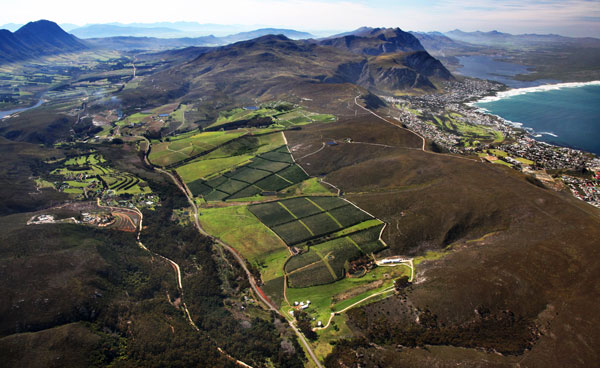
South Africa's premiere Pinot Noir region, Hemel-en-Aarde
Paul Cluver, managing director of Elgin-based Paul Cluver Wines, agrees that South Africa’s top end wines offer “outstanding” value. “You’d never find the same quality/price ratio in France or the US. We’re just suffering from a bit of an image problem. People are not willing to pay more than around £20 for South African wine at the moment. We need to shift our focus to our premium offering and market ourselves better,” Cluver said.

Hamilton Russell’s Walker Bay neighbour Peter Finlayson, owner of top Pinot producer Bouchard Finlayson, agrees that South can get closest to Burgundy in terms of tannin content. Our best Pinots are well structured, with good tannins and good extraction. There are no vacumes in the wine business. I’m seeing a lot of newcomers to Pinot Noir trying to capitalise on the favourable returns it affords,” he said.

Finlayson believes the challenge for South Africa moving forward is to look at terroir specification. “We need to streamline our efforts and focus on making wines with a sense of place. I’d like to see the terroir approach really take hold across the Cape. I’m starting to see it happen,” he said. Thys Lombard, sales and marketing manager of Tokara meanwhile, believes the key to success in the fine wine sphere lies in pricing the wines down slightly, so they remain exceptional value.

“South African fine wines are starting to enter the market at the price they are supposed to be. We got complacent, but we’ve lost our arrogance and become critical of ourselves, which is healthy. We’ve gone back to the drawing board. It’s a good thing that our best wines are not priced too highly. We’re aiming for the top of course, but I’m happy for us to be thriving in the middle at the moment.”

Wine writer Michael Fridjhon agrees that rather than trying to dominate the top tier, South African can carve out a niche at £10-£20. “I’m not sure the future of South African fine wine lies with icon wines. The £10-20 bracket is where we should be ploughing our furrows."

Monday, 3 September 2012

86 review

Eighty-Six is the kind of restaurant where you’d expect to find the cast of Made in Chelsea knocking back Martinis, nibbling on a Cesar salad and bitching about their love rivals on a Wednesday night.
So suited is it to the manicured, perma-tanned, braying bunch, that it has featured in various episodes of the “structured” reality TV show as a setting for the cast’s catty confrontations and cocktail-swilling debauchery.
The restaurant, which opened in its current guise in November 2010, is set in a converted, three-story Georgian townhouse at number 86 Fulham Road; a space once occupied by the somewhat less salubrious Cactus Blue on a stretch of the Fulham Road known as The Beach, due to the toned, tanned denizens seen sashaying up and down it in Twenty8Twelve dresses, beige Chihuahuas named Fluffy and Coco peeping out of their “amaze” Louis Vuitton totes.
Founded by posh party boys George Adams and Charlie Kearns, who cut their teeth at tiki nightclub Kukui in Oxford and the Coco Club in Swiss ski resort Verbier, affectionately known as Fulham-sur-neige, Eighty-Six initially lassoed Mark Broadbent of Bluebird fame as head chef, though Frenchman Simon Levy, previously of Koffmann’s at The Berkeley, has since taken over the reins, giving the menu a decidedly French kiss. Stylish modern European food is the order of the day, ticking trend boxes from foraging to retro classics en route.

Venison carpaccio
Despite its somewhat frivolous location, the owners are serious about serving well thought out dishes made with fresh, seasonal ingredients. Prettified by designLSM, the team behind the breathtakingly beautiful Galvin La Chapelle, the three-tiered venue begins with a well-stocked, dimly-lit bar on the ground floor.
An industrial spiral staircase leads to a lounge area filled with framed pictures of besuited, bushy-tailed, tweed-clad badgers, foxes and ferrets, while on the top floor, the gold-panelled restaurant filled with Hollywood flash bulbs is crowned by a mirrored ceiling – add pink Champagne on ice and you have an Eagles hit, and more gold than Michael Phelps’ medal cabinet.
Our buff, bronzed waiter, Cedric Martinez, with glinting brown eyes, raven hair, immaculately clipped stubble and abs you could grate white truffles on, is fresh from LA, having recently caused controversy in reality TV show The Real Housewives of Beverly Hills.
Striking up a conversation about the besuited animals adorning the walls, Cedric reveals he used to have a ferret called Tequila. My six-foot-seven Finnish dining companion and I begin our meal with an amuse bouche of herb-flecked goat’s cheese on a supermodel-thin bruschetta served with a seasonal strawberry puree. Kudos to the chef for the addition of strawberry, which added welcome sweetness to the salty cheese.

Veal chop
A starter of venison carpaccio, truffle oil, pea shoots and parsnip crisps is indecently moreish, the ruby red, razor-thin slithers of meat umami rich and silky on the palate, enhanced by the crunch of the parsnips and lifted by the earthy aromatics of the salad – like diving into a freshly rained on vegetable patch with a knife and fork.
A sweet and meaty second starter of foie gras, duck rillette and blood orange marmalade teased the taste buds, the audacious addition of marmalade freshening the intensely rich and velvety foie gras, adding zip, zing and citrus zest to the dish, which featured a rogue fold of uninvited ham, while adroitly cutting through the fat.
The wine list is small and perfectly formed, featuring the likes of exciting English white Chapel Down Bacchus, and a selection of Bordeaux classed growths from the notoriously tannic 1986 vintage, including Château Mouton-Rothschild, Haut-Brion, Pichon Lalande, Cos d’Estournel and Leoville Barton.
Mark-ups on the majority of the wines are incredibly fair. I opt for a £38 bottle of the bright, fruit forward Koura Bay Blue Duck Pinot Noir 2010 from the Awatere Valley in Marlborough, New Zealand, which had a lobster rather than a duck on the label and delivered a dense, vibrant, black cherry-filled mouthful, with hints of Oriental spices, licks of salt and a liquorice finish.

Koura Bay Blue Duck Pinot Noir
My main – a swan-white hunk of pan-seared halibut, arrived atop scallop and crab ravioli in a white wine sauce. Though beautifully cooked, I develop food envy at the sight of my companion’s Herculean veal chop glinting in the half-light, its delightfully juicy interior, the colour of a flushed cheek, melting in the mouth.
The accompanying, chunky, chicken salt fat chips are exemplary – crispy on the outside and fluffy on the inside. Green-eyed, I order a bowl of my own while nibbling on a modest but sensational side of sesame-doused Asian veg.
Room must be made for pudding – or, more specifically, for the Brandy apple tart drizzled with vanilla anglaise fashioned into exquisite folds of feather-light pastry that shatters like glass with a delicate tap of the spoon, revealing a base filled with warm toffee sauce so comforting, I’m tempted to ask Cedric for a blanket and a bedtime story.
Instead, he brings me a small glass filled with the golden elixir that is Château Giraud Sauternes 2008, which rewards with a honeysuckle nose and a dried apricot, acacia and peach palate.

Brandy apple tart
At times appearing like a nightclub masquerading as a restaurant, the funky house soundtrack is unapologetically loud, though perhaps this is a thoughtful touch, so the beautiful people merely have to pout and pose in their beloved’s direction rather than converse.
In an apt twist of fate, on my way out I clock Richard Dinan from Made in Chelsea cross-legged at an outdoor table, loafing in suede loafers with a trio of perfectly preened friends. Masked by a mop of blond hair, I glance in his direction and he seems pleased at the recognition, almost as if he’d parked himself by the entrance in a deliberate bid to get laid in Chelsea.
Eighty-Six, 86 Fulham Road, London, SW3 6HR; Tel: +44 (0)20 7052 9620

Monday, 13 August 2012

Wine milkshakes go on sale in US


In a move that may turn many a stomach, LA burger chain The Counter has added wine milkshakes to its menu. As reported on db.com, the milkshakes, inspired by classic desserts, are being blended at select Counter restaurants across Los Angeles. According to their creator, the wine helps to cut through the sweetness of the shake, with the flavour more milkshake-like to start, but with a wine finish.

The burger chain is offering three flavors: Pinot Noir, featuring cherries, chocolate and vanilla ice cream, Sweet Peach, made using sweet wine, peach nectar and vanilla ice cream, and Mimosa, featuring sparkling white, orange juice and vanilla ice cream.

Perhaps due to the ongoing success of the Santa Barbara-based film Sideways, in which the protagonist Miles extols the virtues of the difficult but rewarding Pinot Noir grape, the Pinot Noir shake is proving the most popular of the trio. The shakes can be found on pour at The Counter restaurants in Santa Monica, Marina Del Rey, Century City, Toluca Lake, El Segundo, Torrance and Hermosa Beach.

Wednesday, 8 August 2012

Camel Valley

On the second leg of my English wine road trip, Tobias Gorn, head sommelier of Michelin-starred Indian restaurant Tamarind in Mayfair, and I stopped off at Camel Valley in Cornwall, where we were shown around by winemaker Sam Lindo, who talked us through the Camel Valley range. In this video, we try the award-winning Pinot Noir Rosé Brut 2010, and finish up with a wine made from what could become England's flagship white grape: Darnibole Bacchus 2011. Chin chin!

Friday, 3 August 2012

Ridgeview

During a recent wine road trip, the gregarious Jimmy Smith, aka The Wine Guy, and I stopped off at Ridgeview in East Sussex on the day of the Olympics opening ceremony, to quaff a few of England's finest sparklers, two of which are featured in this video – Ridgeview's flagship fizz Bloomsbury Brut and quirky sparkling red Pimlico. Chin chin!

Thursday, 2 August 2012

English producers need to stop aping Champagne


Sam Lindo, chief winemaker of Camel Valley in Cornwall, has spoken out about English producers’ approach to sparkling wine, claiming too many are trying to ape Champagne. “A lot of English sparkling wine producers are trying to make Champagne by using the same grapes and the same winemaking methods. We should be doing something different,” Lindo told db.com.

“I think we are the only English sparkling wine producer that makes fizz with a flavour profile you wouldn’t be able to find anywhere else in the world,” he added. While he uses both Chardonnay and Pinot Noir in his sparklers, Lindo also gives prominence to Seyval Blanc, using around 60% in the estate’s flagship Brut. “We should be using grapes best suited to our cool climate, that’s why I work with Seyval Blanc, Bacchus, Reichensteiner, Rondo and Dornfelder,” Lindo said.

Rather than trying to make rich, full-bodied sparklers, Lindo is deliberately aiming for a subtle flavour profile. “Australian wine pioneer Len Evans once said: ‘taste is best enjoyed at the lowest possible level of perception’, and I’m a big believer in that. Big wines tire very quickly – it’s the subtle wines that hold your interest. I want our wines to display an underripe character that reflects their English roots.

“I’m looking for flavours of fruits commonly grown in England: green apple, gooseberry and elderflower in the whites, and strawberry, raspberry and red apple in the rosé,” he said. Lindo, who sells 40% of his wine at the cellar door, said he doesn’t know from year to year what percentage of still wine Camel Valley will make until harvest time. “If we can’t make sparkling wine from the grapes, then we’ll make still wine,” he said.

As for the 2012 vintage, Lindo said that Cornwall had escaped a lot of the heavy rains that have plagued the rest of the country in recent months. “We’ve been really grateful for this recent sunny spell, but it’s impossible to predict the quality of a vintage until harvest time,” he said. 

Tuesday, 17 July 2012

Rex Pickett pushing for Sideways sequel


Rex Pickett, author of the popular wine-themed novel Sideways, is pushing the Oscar-winning director of the Sideways film, Alexander Payne, for a sequel based on his second novel, Vertical. “Tens of millions are on the table and no sequel. Why? The book’s been written, the screenplay’s been written,” Pickett told the drinks business. “No one in Hollywood understands why Payne is not in pre-production on Vertical. I’m sick of answering that question,” he added.

Fox Searchlight Pictures owns the film rights to Miles and Jack. If Payne woke up tomorrow and said he wanted to do a sequel then it would be made. Payne has the power to make whatever movie he wants, within reason, for the rest of his life. I like to feel I played a small part in that,” Pickett said. Sideways: the Play is running to sell-out audiences in Santa Barbara through the Ruskin Theatre Group. The play is due to run in LA until mid-August, after which, Pickett is keen to take it outside America, with a London run on the cards.

He also isn’t ruling out a third book: “People are clamouring for part three. I’m circumspect, as whatever decision I make will govern the next two years of my life,” he said. Originally rejected by 15 publishers, Sideways has sold over 150,000 copies in the English-language, and has been translated into 12 different languages. The film, released the same year as the book in 2004, has won over 350 awards including two Golden Globes for best comedy picture and best screenplay.

Pickett admits he regrets “letting (himself) go to a few years of celebratory hedonism” after the success of Sideways. “I should have had my business hat on and been wary of people making millions while I cavorted around in a state of ostensible bliss,” he said. Pickett’s sequel to Sideways, Vertical, was published in October 2010. Set in Oregon seven years later, protagonist Miles has found success with a novel that has been turned into a film and is invited to be master of ceremonies at the International Pinot Noir Celebration in McMinnville. The 26th annual event takes place on 27-29 July 2012.

Pickett is due to release his own wine onto the market soon. Unsurprisingly, he has opted for a Pinot in the form of Ne Plus Ultra, Willamette Valley Pinot Noir. Alexander Payne recently directed The Descendants, starring George Clooney, based on a novel by Kaui Hart Hemmings. It won an Oscar this year for Best Adapted Screenplay.

Friday, 13 July 2012

“Moët is not a machine”


Benoit Gouez, cellar master of Moët & Chandon, has spoken out about the LVMH-owned Champagne house, insisting it is not a volume-driven “machine." Speaking to the drinks business during a Moët Brut Impérial base wines tasting in London this week, Gouez said: “We’re not a big industrial machine that only cares about volume; we care about quality and detail.” Gouez was referring to his decision to stop the 2011 harvest for a week and send 800 pickers home while still paying them – a first in Moët’s history – to improve the chances of the vintage.

“I wanted to send a message out to the Champenois that we care about quality. The cost was an issue for financial people – the most important thing was whether I could get a vintage wine out of it. It paid off, but I still haven’t decided if I’m going to declare the 2011 vintage or not.” Gouez did admit however, that being a big company has its advantages.“ Bigger is better because it gives you access to the best grapes and buys you the luxury of choice. We were only able to stop the harvest because we’re big,” he said.

He admitted that he prefers the challenge of more difficult years like 2003 to easy years like 2002.“People should judge winemakers on difficult years – that’s where the skill comes in. It gets boring if things are too easy,” he said. Despite referring to it as “a piece of cake” to work with, Gouez described Chardonnay as the “biggest disappointment” in 2011, Pinot Noir as “light” and Pinot Meunier as a pleasant surprise. “Pinot Meunier developed nicely in 2011 and is showing a lovely purity on the mid-palate,” he said, defending the grape as having “a role to play” in Champagne.

“Pinot Meunier is the bridge between Pinot Noir and Chardonnay. You have to adapt your winemaking and treat it like a white grape in order to preserve its freshness and fruitiness,” he revealed. As to whether he would consider putting disgorgement dates on Moët Brut Impérial, Gouez doesn’t feel the public is ready for it. “A lot of consumers don’t even know the difference between vintage and non-vintage Champagne, so disgorgement dates are only going to confuse them further. They might think it’s a bottling date, or, even worse, a best before date,” he said, though did reveal that putting the information on a QR code on the back label was a possibility.

Speaking of the 2012 vintage, Gouez admitted conditions thus far have been challenging. “It won’t be a huge crop, that’s for sure, but the quality of a harvest is decided in the last few weeks before the grapes are picked, so we’ll have to wait and see,” he said. In the meantime, 2004 will be the next Moët vintage release, which will go on sale in the UK late August, with 2004 Rosé following in February 2013. Gouez describes the vintage as “racy, slick and elegant”, but lacking the power of 2003 and the richness of 2002, “dozens of thousands” of bottles of which have been kept back in the Moët cellars to be used in the Vintage Collection series. “We’ll see 2002 again,” he confirmed, revealing 2006 will be a vintage year, but not 2005, as he doesn’t believe the quality is there.

Gouez predicts however, that many Champagne houses will release 2005 to cash in on the success of the 2005 vintage in Bordeaux and Burgundy. Speaking of the 2009 vintage, Gouez glowingly compared it to 2002: “2009 was an easy year: ripe, clean, well balanced. There were no decisions to make, it’s already bottled. Keen to push Moët rosé in a big way in 2013, Gouez believes the house’s pink offering has been under the radar for too long. “We’re the leader in the category but nobody knows it,” he said. 

Monday, 18 June 2012

5m bottles of English fizz to be made in UK by 2015


Production of English sparkling wine in the UK is set to hit 5m bottles by 2015, according to Ridgeview winemaker Charlie Holland. “It’s a nervous and exciting time for English sparking winemakers – sparkling wine now accounts for 50% of plantings in the UK,” Holland told the drinks business at the London International Wine Fair last month.
There are almost 400 vineyards in the UK now, almost double that of ten years ago. But despite the recent boom, Holland stressed the importance of distinguishing English sparking wine from Champagne. “We have a unique terroir that makes English sparkling wine special. It’s more expensive to produce than Champagne, the cost of land is higher and yields are lower.
“It’s a fallacy to say you can’t ripen grapes in England. We’re a very cool climate region, but this allows for a long growing season, helping grapes develop full phenolic ripeness, a full flavour profile and natural sugars,” he said, adding, “English sparkling wines have a lovely leanness and freshness, with signature citrus flavours and naturally high acidity, which is crucial for sparkling wine.”
In terms of ageing potential, Holland admitted that because the winery was only founded in 1994, he doesn’t know how long the wines will last. “I tried the 2000s recently and they still taste so young and fresh,” he said, revealing he would consider offering late disgorged versions of some of the cuvées in the Ridgeview range as the wines age quickly under cork. He also revealed that vine age is incredibly important for English sparking wine, and that at 17 years old, the Ridgeview vines are in their prime.  
“English sparkling has had a lot of good press, and consumers want to find out what the buzz is all about. It also fits with the trend for buying homegrown products,” he said. The Ridgeview range is named after London boroughs, such as Knightsbridge and Fitzrovia, as a tribute to Christopher Merret, the 17th century English physician credited by many with inventing sparkling wine before French monk Dom Pérignon.  
Holland is keen for “Merret” is be used as catch-all term for English sparkling wine. “Merret has been put forward but the topic is still under discussion. I’m hoping we’ll come up with a word for English sparking wine soon, as it doesn’t exactly roll of the tongue,” he admitted. Despite the winery’s success in the UK, exports now account for 20% of Ridgeview’s sales. “Exports are a massive thing for us. We’re seeing great success in New York, Holland, Belgium, Japan, Hong Kong and Australia – there isn’t the same stigma there for English sparking as we’ve experience in France, Spain and Italy,” he said.
Asked whether he’d ever consider a non vintage, Holland admitted that he doesn’t have enough reserve wines to be able to make one. “We’re very much a vintage-based property. Every year has a story to tell and we’re keen to express that, but we work hard to try to make a similar tasting product each year and have to adapt our winemaking to the specifics of the vintage." 
Holland revealed that Chardonnay “grows brilliantly”, but that Pinot Noir and Pinot Meunier were both “swines to grow” and very “sickly” grapes. Trying to get a decent crop from either is challenging – Pinot Noir is the most expensive grape to buy, and hardest to get hold of,” he said. 

Sunday, 13 May 2012

Roussillon

Nestled in a quiet corner of Pimlico far from the madding crowds of Sloane Square, Roussillon takes its name from the southeastern French commune in the Lubéron. Originally called Marabel’s, it was forced to change its name due to confusion with Marco Pierre White’s restaurant Mirabelle, which opened in the same week in 1997. Holding a Michelin star from 2000 to 2011, resident chef Alexis Gauthier upped sticks with Italian sommelier Roberto Della Pietra to run Gauthier Soho in May 2010. Head chef Shane Hughes has since taken the reins and is continuing the tradition of serving modern French fare made from seasonal British ingredients with a particular focus on vegetables and herbs, which are freshly picked each morning.

Rocking up to the hidden gem, I was wooed by its sherbet lemon façade. Inside, the living room-like interiors are a soothing shade of beige, so soothing in fact, they almost act as a visual lullaby. On my visit, the restaurant is disconcertingly bare on arrival, but soon fills up with smartly dressed, softly spoken locals. Hung on the walls are curious paintings of vegetables, from masculine asparagus spears to the feminine folds of an artichoke. The flora and fauna theme continues on the plant-strewn menu, and even in the loos, which are prettified by sketches of bilberries and wild flowers.
My dining companion and I begin with a chilled glass of Gosset NV, Roussillon’s house Champagne. Crisp and fresh and yet with a biscuit and brioche-laced richness, it makes for a deliciously refreshing drop. To accompany our apéritif, we are offered a colourful trio of nibbles: pickled quails eggs masquerading as giant olives, sweet and sour macadamia nuts, and a childlike bubblegum pink smoked salmon and beetroot mousse. The teriyaki-soaked macadamia nuts are irresistibly moreish, while the light and airy smoked salmon mousse proves a trompe l’oeil trick, its vivid pink colour implying sweetness and yet delivering a surprisingly savoury mouthful. The arrival of the bread basket brings gasps of delight, the croquette-shaped brioche and salted butter proving a particularly pleasing highlight.

An intercourse follows perhaps aiming to show off its veggie credentials – a creamy green pea and asparagus velouté with a hint of white truffle, which arrives warm and slides down my throat easily in a comforting start to proceedings. Bypassing the veggie friendly seven-course “garden” menu, dinner begins in earnest with a langoustine carpaccio prettily displayed around the edge of the plate amid a garden of cherry tomatoes, artichokes and sprigs of green. In the centre lies a disc of clear tomato jelly, and atop, a generous dollop of salty sustainable caviar. Light, fresh and palate cleansing, Roussillon’s vegetarian roots are once again firmly on display.


To follow is a deliciously rich cheese soufflé bobbing amid a cheesy moat. Its piping hot interior oozes liquid cheese, doubling for central heating on this cool night like an oligarch’s cheese on toast. The main event: poussin and foie gras with wild mushrooms, mashed potato and green beans in a Duke of Clarence Madeira sauce is deliriously decadent, the heady Madeira sauce perfectly complementing the succulent little bird and creamy mash, though after less than half I’m defeated, the rich foie gras erring on the sickly side.

Despite feeling stuffed as a pillow, our affable waiter insists we order pudding, promising modest portions. I opt for the lemon tart, while my companion is lured by the sticky toffee pudding. My hunk of tart, which arrives on a black slate with a crème brûlée-like roof, is as large as a pizza slice. Undeterred, I plunge my fork in and am rewarded with intensely zingy lemon curd-like innards enhanced by the glass-like shard of burnt sugar on top. Swimming in a sea of  banana foam, the moist sticky toffee pudding is soothingly sweet.


Roussillon’s wine list is unsurprisingly focused on southern France, with welcome cameos from Turkey and the Lebanon. On our visit, we begin with a glass of creamy Vondeling Chardonnay 2008 from Paarl in South Africa that charms with its rich nose of buttered popcorn and hot buttered toast. To match with our mains, our smiley Hungarian sommelier, who insisted on being called Garry, recommends a home-grown drop: Pannonhalmi Apatsagi Pinot Noir 2009; once made by Benedictine monks. A pretty, feminine Pinot with a bright nose of raspberries, cherries and hints of spice, its smooth, soft and silky palate serves as wonderful proof of the heights Hungarian reds can reach when lovingly encouraged.

Though perfectly pleasant, Roussillon is lacking that all-important sparkle ignited and kept aflame by Gauthier. While the food is consistently good, it’s bereft of the flair and playfulness that once made it great. Roussillon is a grown-up restaurant for grown-up diners. It isn’t trying to be cool or hip, but rather coast along comfortably as a sedate, romantic hideaway for discreet locals. Perhaps Hughes will bring the sleeping beauty back to life?

Roussillon: 16 St. Barnabas Street, London SW1W 8PB; Tel: +44 (0)20 7730 5550; an eight-course tasting menu costs £75.

Monday, 30 April 2012

Champagne Bollinger in pictures


After lunching on lemony scallops in a natural wine bar in Paris, we arrived at the impressive Bollinger HQ in Aÿ, made more magnificent by a bright blue, cloudless sky. Founded in 1829, the company is one of the last Champagne houses to still be family-owned, remaining under the watchful eye of Madame Lily Bollinger from 1941-1971. The majority of the grapes that go into Bollinger's cuvées come from Grand Cru and Premier Cru villages, as we were soon to find out...


Dropping our bags off, we hopped in a 4x4 and were taken on a tour of the Bollinger vineyards. Unusually in Champagne, the company owns 60% of its vineyards, 60% of which are planted with Pinot Noir and 40% with Chardonnay, as Bollinger favours the richness and body Pinot Noir brings to the blend. The little house you can see in the distance is for the grape growers and pickers to take shelter in when it rains. They also serve as a water source, as each are home to a well.


Striking a pose in front of a very special vineyard: Clos des Chaudes Terres, meaning the clos of warm earth – a walled, ungrafted, 100% Pinot Noir vineyard worked by hand behind Bollinger HQ in Aÿ, which, along with the neighbouring Clos St Jacques, nurture the Pinot grapes for the incredibly special Bollinger Vieilles Vignes Français, of which only 2,000 bottles are made in exceptional vintages.


No mention of Bollinger would be complete without a hat tip to James Bond. At the entrance to the house behind glass is one of the famous Bollinger Bond Walther PPK bullet Champagne coolers made to celebrate the launch of Quantum of Solace. Over dinner, president Jérôme Philipon admitted that Bollinger's association with the secret agent was helping to boost sales of the brand in Asia, and revealed that the company will launch a couple of Bond-branded bottlings this October to coincide with the Skyfall premiere in London.


From bullets to cars – I spotted this rather fetching Bollinger branded Mini in the Bolly HQ car park.


Having watched Bollinger's award winning master cooper in action, noisily hammering one of their French oak barrels into shape, I took a moment to enjoy the sunshine streaming into the courtyard.


Later that day, we were treated to dinner at Madame Bollinger's house, which has been kept exactly the same as when she lived in it, kicking off the evening with a chilled glass of Grand Cuvée. If you look closely, you'll spot our affable host, Elizabeth Ferguson of Mentzendorff.


The scene is set for our night of revelry 


I spotted a pair of wild boar heads proudly mounted on the drawing room wall – legend has it that wild boar still roam the forests of Champagne. I failed to spot any on my visit, but I did hear an ominous rustling coming from the woods next to Bollinger's highest vines.


Kate Powell, aka The Wine Chick, got a shock when she lifted what she thought was a prayer chair prettifying Madame Bollinger's drawing room and found an adult potty – curiouser and curiouser.


Bollinger president Jérôme Philipon holds court over dinner with his ebullient harem. He can be seen pouring a bottle of the near-mythical Vieilles Vignes 1997, which he presented as a blind tasting. 


Our feast kicked off in earnest with a delectable starter of crab cake in a yuzu (Japanese citrus) and coriander sauce decorated with salad leaves and an edible yellow pansy. Such a wonderful start to the meal, the yuzu lifted the crab and gave the dish a lovely freshness, while the accompanying La Grande Année Rosé 2004 had its own floral characterisitcs, along with notes of wild strawberry and mint. 


Next up were silky, crispy slithers of red mullet in a creamy sauce paired with La Grande Année 2002. The richness of the cream sauce paired wonderfully with the rich, biscuity 2002 - one of the greatest Champagne vintages in living memory. 


Dessert was a raspberry tart on a sesame biscuit base with vanilla mousse and a strawberry macaroon. Exquisitely presented, the textured biscuit base complemented the sharp tang of the raspberries, which in turn paired beautifully with the summer fruit-filled NV Rosé.


My food and wine pairing of the night however, was the Bernard Anthony aged Comté with Bollinger R.D. 1995. Words cannot do justice to the majesty of the pairing, the grainy, nutty, almost toffee-like Comté holding its own against the might of the rich, intense, hazlenut-filled R.D. Both the cheese and the Champagne displayed an almost Sherry-like sweetness and complemented each other so cleverly. It remains my ultimate food and wine match, which I doubt can ever be bettered. 


Our final treat was a glass of the super rare Bollinger Vieilles Vignes Françaises 1997, which Jérôme was incredibly kind to open. I'd dropped a large number of hints about my desire to try it on Twitter, though never believed I actually would. The nose was unlike any Champagne I've ever tried: savoury, earthy, intense and truffly; the Pinot Noir really showed through. On the palate, it seemed more like a still wine and had a real vinous character, the earthiness remaining, along with the slight presence of tannin and an incredibly long and pleasing nutty finish. Drinking it at Madame Bollinger's house only heightened the enjoyment of this rough diamond. 


After all that excitement, it was time for bed, and what more fitting way to sleep, having been treated like a princess, than in a four poster bed. I could get used to being under Bollinger's wing. Waking up the next morning, I had to be dragged onto the Eurostar back to London.

Tuesday, 27 March 2012

Bollinger Vieilles Vignes


During a recent visit to Champagne, I was lucky enough to try the near mythical Bollinger Vieilles Vignes Françaises 1997 at Clos Chaudes Terres behind Bollinger HQ in Ay with the Wine Chick Kate Powell. The 100% Pinot Noir comes from ungrafted vines from this tiny pre-phylloxera clos and the neighbouring Clos St-Jacques. Only 3,000 bottles are made in exceptional vintages. See what we thought here...