Having spent an
idyllic year in the intoxicating city of Granada in Andalusia, when an invite
to a long, lazy, “Taste of Andalusia” lunch from Goodge Street-based Spanish restaurant Salt Yard pinged
in my inbox, I speedily rsvp’d. Salt Yard makes up one third of Simon Mullins
and Sanja Morris’ Spanish restaurant empire, with Dehesa in Oxford Circus and
Opera Tavern in Covent Garden completing the trilogy. A quick chat with Mullins
on arrival at Salt Yard on a drizzly Sunday afternoon confirms that the pair
are seeking to expand their empire with two new sites in the London district du
jour, Soho, though not before the launch of their forthcoming Spanish cookbook.

Entering the
buzzing upper deck of the restaurant, a glass of Mas Macia Cava is thrust into
my hand. Made in Penedès rather than Andalusia, it serves as an ideal palate
cleanser. The most populous of Spain’s autonomous communities, Andalusia is
divided into eight provinces: Almería, Cádiz, Córdoba, Granada, Huelva, Jaén, Málaga
and its capital, Seville. As varied in its terrain as it is in its cultural
history, Andalusia boasts snow-capped mountains, verdant wetlands, an arid
desert and miles of manicured coastline. The Andalusia we know today
has been molded and influenced by everyone from the Phoenicians and the
Carthaginians to the Vandals and Byzantines via the Greeks and Romans. The
region’s most famous rulers were the Moors, who presided over Al-Andalus from
711 until the reconquest of Granada in 1492. Having ruled the roost for almost
800 years, the Moorish stamp will be forever imprinted on Andalusia’s
collective cultural psyche.

Al-Andalus, as
it was then known, was the power centre of a Muslim empire that stretched its
tentacles across most of Spain and Portugal, and as far south as Nigeria in
West Africa. Under Muslim rule, the Moors brought new thinking to Andalusia,
and reforms in architecture, philosophy, astronomy and most enduringly,
gastronomy, introducing exotic ingredients such as saffron, almonds, cumin, pimentón
and pomegranate from Africa and the Middle East, which still inspire and inform
Andalusian cuisine. To illustrate this interweaving of cultures,
Mullins and head chef Andrew Clark – a towering figure with a sailor’s
beard, heavily inked arms and a smile that stretches all the way to Gibraltar,
had devised an eight-course menu highlighting Andalusia’s rich culinary
history, including numerous hat tips to the Moors.

Before we’re
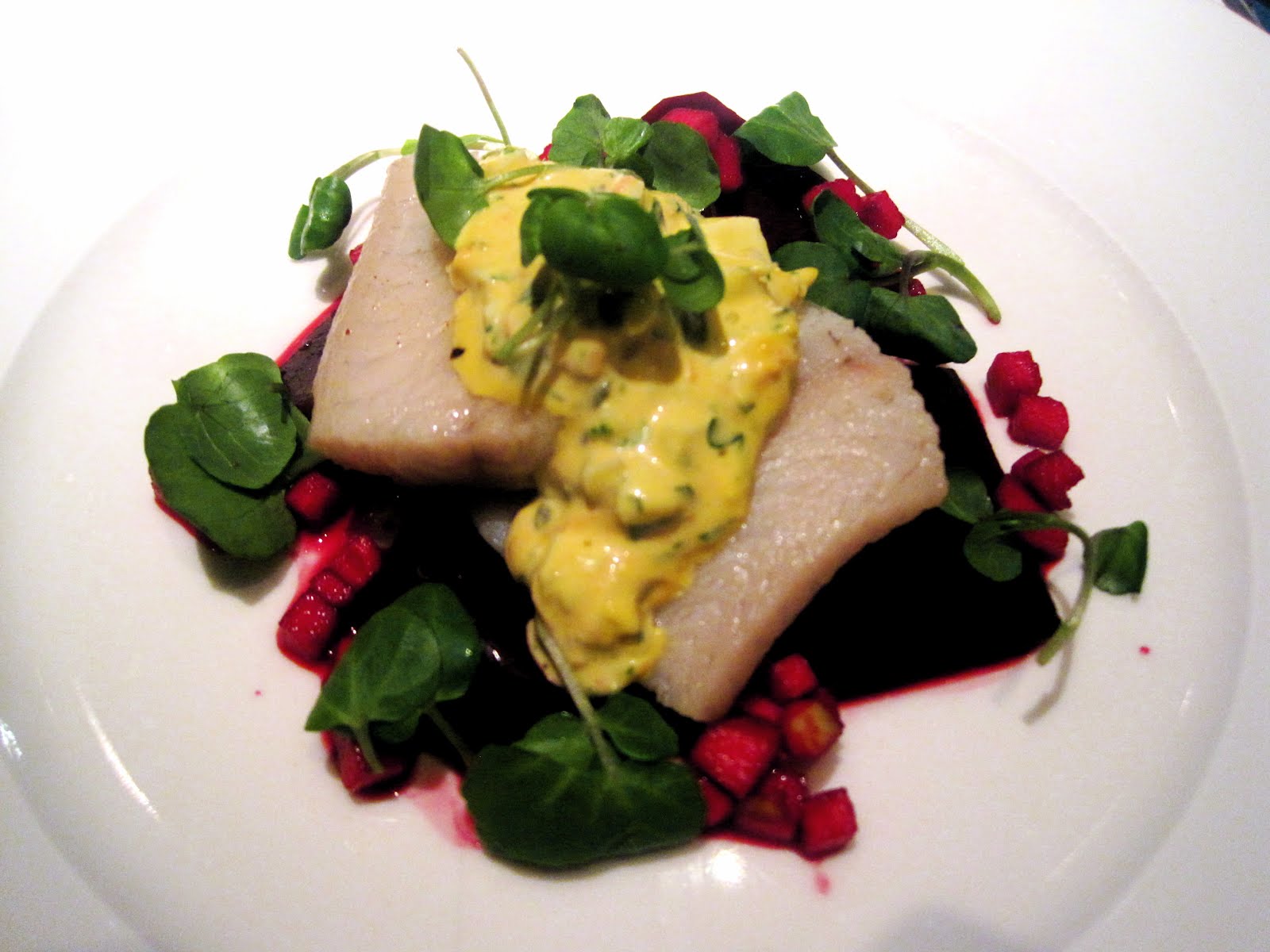
allowed to dive into our first dish: grilled baby leeks, quail eggs, beetroot
and ajo blanco, Mullins mulls over a brief culinary history of Andalusia,
paying homage to the Phoenicians for passing on the skill of salting fish, and
the Greeks for planting the first grape vines. Made beautiful by the raspberry ripple-like
whirls in the beetroot, the dish delivers a pleasing variety of textures, from
the crunch of the leek to the creaminess of the garlic sauce and the soft
centres of the quail eggs. Almost audaciously, the dish is matched with a nutty
Sanchez Romate Amontillado, its sweet nose of toffee, almonds and hazelnuts
balanced by a surprisingly dry, saline palate.
Dish two, though not immediately recognisable as Andalusian, was the most delightful of the line-up. Borrowing from fashionable Peru, it consisted of a simple bream ceviche with coriander oil topped with a scoop of tangerine-coloured gazpacho sorbet hovering atop the dish like a frozen egg yolk. The lime fuelled, lip-smackingly fresh ceviche was complimented by the brave flavours of the icy gazpacho, with tomato, pepper and garlic all present. It proved a wonderful match for the accompanying Bodegas Tierras Gauda Albariño 2011 – mirroring the ceviche in zippy citrus freshness, with lemon, lime and apricot all in the mix, wrapped around a flinty mineral core.

Dish three – roast scallops with plum tomatoes and cumin salt – was slight in size but mighty in flavour, the ruby red tomatoes sweetening the meaty scallops, while the cumin salt added a welcome kick of spice. Peering through the kitchen window, I noticed our ebullient, well-inked chef taking a well-earned swig from his Sherry glass while we moved on to our first “natural” wine of the feast from the Alpujarras. Cloudy and rust-coloured, its nose was oxidized and Sherry-like, and any terroir expression that may have existed on the palate was masked a musky, cider-like cloak. After an increasingly heated debate about the merits and malpractice of natural wine, we moved swiftly on to dish four: calamari, soft shell crab and prawns with saffron aioli. Served on a black slate painted yellow by the saffron, the crab danced in mid air atop the squid rings, spindly legs splayed. Lightly fried in an incredibly delicate batter, the crunchy exteriors and soft interiors were lifted by a disc of cooked orange, which added an exotic Moorish twist, while the accompanying Bodegas Hidalgo La Pastrana Manzanilla delivered an invigorating, tangy, sea air kick.

Perhaps the most Moorish of the octet was dish five: chargrilled quail with pomegranate molasses and smoked almond puree. Glinting like rubies, the juicy pomegranate pips were assuaged by the sweet, grainy molasses, both of which enhanced the tender, juicy bird in a dish you could easily encounter in Marrakech or Algiers. Our second natural wine of the lunch – a Tempranillo, Cabernet Sauvignon, Cabernet Franc, Merlot and Granacha mash up, was a slight improvement on the natural white offering, but still too barnyard-like to yield true enjoyment from. Before dish six, our trusty chef leapt from the kitchen to explain the creation – we were about to be served Essex rabbit, though he assured us he’d removed the white stilettos before plating up. Rabbit is one of the few foods I feel guilty about eating, so it came as a relief when, on chomping, I encountered a taste akin to chicken breast. The accompanying red blend from Cadiz was a class act, showing elegance, finesse, structure and layers of spiced black fruit.

The penultimate plate reached a culinary crescendo: roast oxtail slow cooked for eight hours then soaked in lemon, served with green olives and a judion bean puree. The slow cooking showed in the super soft, achingly tender meat, enlivened and enhanced by the zing of the lemon and the purity of the buttery bean puree. An exquisite symbiosis of East and West, it served as proof that often the best dishes are the simplest. Our wine match – Tabener 2007 from Huerta de Albala in Cadiz, made from 80% Syrah and 20% Cabernet Sauvignon, shone. Dense and layered, it showed notes of blueberry, blackberry, smoke and spices, and proved a delicious companion for the oxtail.

Stuffed as a
pillow and pink cheeked from the wine, we rounded off our epic Andalusian feast
with a taste of heaven – tocino de cielo, literally meaning “bacon from heaven”,
a decadent dish first developed by nuns made from egg yolks and sugar, served
with a scoop of zesty blood orange sorbet to lift the tooth tinglingly sweet
tocino. Sat opposite a Granadino in a striped shirt called Cayetano who worked
as a photographer for National
Geographic magazine, his
deeply-felt visceral and emotional enjoyment of this rollercoaster of a meal
proved the ultimate compliment. If a man born and bred in the majestic, once
Moorish kingdom could find pleasure and points of reference in the dishes, from
the cumin and the pomegranate to the ground almonds, sultanas and saffron, then
both Mullins and our beautifully bearded chef had succeeded in brightening a dimly-lit London dining room with a
kaleidoscope of Andalusian flavours.